New post
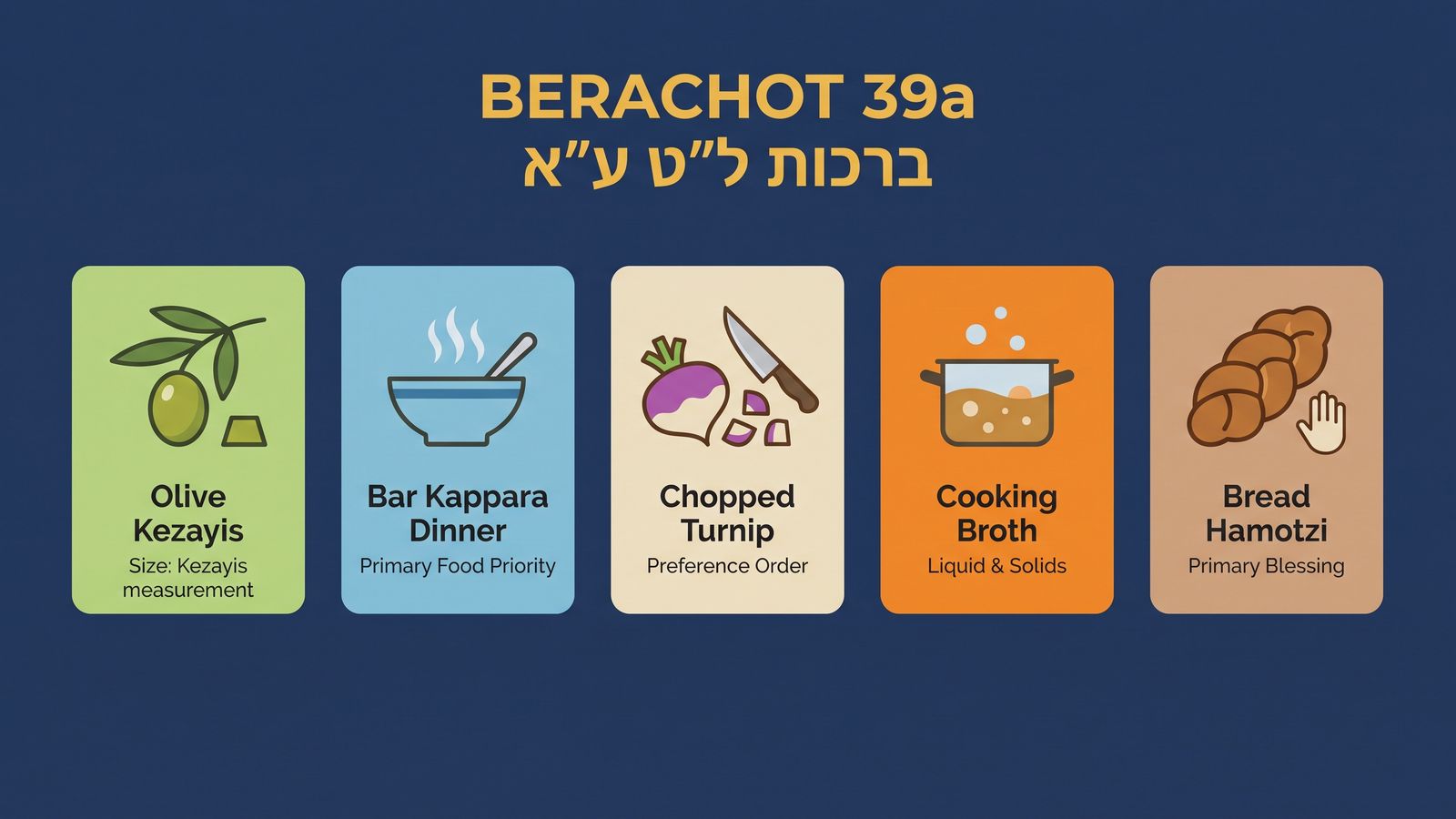
].
***
# מסכת ברכות דף ל״ט עמוד א׳ — Shiur Reading Script
### Section 1: The Measurement of a Kezayis
At the end of:
> **למ״ד ח׳ עמוד ב׳**
The **Gemara** relates that **Rabbi Yochanan** ate a salted olive after its pit had been removed, and he recited a **berachah acharonah** [2]. **Rabbi Yirmiyah** questioned whether enough olive remained to constitute a **kezayis** [2].
So we have a **kushya**:
> **בָּצַר לֵיהּ שִׁיעוּרָא**
Once the pit was removed, the olive seemingly lacked the required quantity for a **berachah acharonah** [2].
**Rabbi Yochanan** gives us a **teretz**:
> **מִי סָבְרַתְּ כְּזַיִת גָּדוֹל בָּעִינַן? כְּזַיִת בֵּינוֹנִי בָּעִינַן, וְהָא אִיכָּא.**
The halachic measurement is not based on an unusually large olive, but on an average-sized olive [2]. This olive was exceptionally large, so even after removal of its pit, at least an average **kezayis** remained [2].
We have a **re'aya** from a Mishnah:
> **זַיִת שֶׁאָמְרוּ — לֹא קָטָן וְלֹא גָדוֹל, אֶלָּא בֵּינוֹנִי; וְזֶהוּ אֲגוּרִי.**
Whenever **Chazal** establish an olive volume, they mean neither a small nor a large olive, but an average olive called an **Aguri** [2].
**Rabbi Abbahu** clarifies the name:
> **אברוטי** *(or according to another version:* **סמרוסי** *)*
Its actual name is not **Aguri** but **Avruti**—or, according to another version, **Samrusi** [2].
Why is it called **Aguri**?
> **שֶׁשַּׁמְנוֹ אָגוּר בְּתוֹכוֹ**
Its oil is gathered and retained inside it rather than being absorbed into the fruit [2][5].
The **maskana** is that a **berachah acharonah** ordinarily requires a **kezayis**, but the measurement is based upon an average olive, not the particular olive being eaten [2]. **Tosafos** emphasizes that the quantity requirement concerns the **berachah acharonah**; a **berachah rishonah** is required even for less than a **kezayis** [2].
***
### Section 2: Cooked Vegetables and the Story of Bar Kappara
Now we come into the **din** of cooked vegetables:
> **שְׁלָקוֹת**
The **Gemara** asks whether this **machlokes Amoraim** is actually a **machlokes Tannaim** regarding the **berachah** on cooked vegetables—**Borei Pri Ha'adamah** versus **Shehakol**—paralleling a dispute between two students of **Bar Kappara** [2][5].
Here we have a **ma'aseh**: Two students were sitting before **Bar Kappara** [2]. Cooked cabbage, cooked **durmaskin**, and young poultry (**pargiyos**) were brought before them [2]. **Bar Kappara** authorized one student to recite the **berachah** on behalf of the group [2].
The student acted quickly:
> **קָפַץ וּבֵרֵךְ עַל הַפַּרְגִּיּוֹת**
He quickly recited the **berachah** over the poultry, and the other student laughed at him [2][3].
**Bar Kappara** initially said:
> **לֹא עַל הַמְבָרֵךְ אֲנִי כּוֹעֵס, אֶלָּא עַל הַמְלַגְלֵג.**
“I am not angry with the one who recited the **berachah**; I am angry with the one who laughed [2].” His reasoning: perhaps the first student had rarely tasted meat and therefore particularly cherished it; even if his ruling were debatable, it was improper to ridicule him [2].
**Bar Kappara** then reversed the focus:
> **לֹא עַל הַמְלַגְלֵג אֲנִי כּוֹעֵס, אֶלָּא עַל הַמְבָרֵךְ.**
He gave **mussar** to the student:
> **אִם חָכְמָה אֵין כָּאן, זִקְנָה אֵין כָּאן?**
Even if the student did not know the halacha independently, was there not an elder—**Bar Kappara** himself—whom he could have consulted before acting [2][5]? A **Tanna** reports that neither student lived out that year, underscoring the severity of disrespectful conduct involving Torah and one's teacher [2].
***
### Section 3: The Gemara's Analysis
The **Gemara** suggests:
> **נֵימָא כְּתַנָּאֵי**
The **Gemara** asks whether this **machlokes Amoraim** is actually a **machlokes Tannaim** [2]:
For the student who made a she'hakol on the poultry:
> **חָבִיב עָדִיף**
The student who made a she'hakol on the poultry held that cooked vegetables require **Shehakol** [2][6]. Since both the vegetables and the poultry required **Shehakol**, the preferred food takes precedence [2][6].
For the student who laughed:
> **פֵּירָא עָדִיף**
The student who laughed held that cooked vegetables retain **Ha'adamah**, while poultry requires **Shehakol** [2][6]. Therefore, produce, whose **berachah** is more specific, takes precedence [2][6].
The **Gemara** rejects this:
> **לָא, דְּכוּלֵּי עָלְמָא שְׁלָקוֹת וּפַרְגִּיּוֹת שֶׁהַכֹּל נִהְיָה בִּדְבָרוֹ.**
No proof can be derived [2][6]. Both students may have agreed that cooked vegetables in this case and poultry both required **Shehakol** [2][6].
Their actual dispute was:
First view:
> **מַר סָבַר חָבִיב עָדִיף**
The student who made a she'hakol on the poultry held that personal preference takes precedence [2][6][7].
Second view:
> **מַר סָבַר כְּרוּב עָדִיף דְּזָיֵין**
The other student held that cabbage takes precedence because it is particularly nourishing [2][6][7].
Therefore, the incident does not conclusively establish which **berachah** is recited over cooked vegetables [2][6].
***
### Section 4: Chopped Turnips
**Rabbi Zeira** reports what he was taught in two different batei midrash concerning turnip heads:
> **גַּרְגְּלִידֵי דְלִפְתָּא**
Concerning chopped turnip heads [2]:
First case:
> **פְּרִימָא רַבָּא**
If chopped into large pieces, the **berachah** is **Borei Pri Ha'adamah** [2][3].
Second case:
> **פְּרִימָא זוּטָא**
If chopped very finely, the **berachah** is **Shehakol** [2]. The apparent logic was that extreme chopping diminishes or removes the vegetable's recognizable identity [2].
When **Rabbi Zeira** came to the yeshiva of **Rav Yehudah**, **Rav Yehudah** ruled:
> **אִידִי וְאִידִי בּוֹרֵא פְּרִי הָאֲדָמָה.**
Whether chopped coarsely or finely, the **berachah** remains **Ha'adamah** [2].
Why is it chopped so thoroughly?
> **כִּי הֵיכִי דְּנַמְתֵּיק טַעְמֵיהּ.**
It is chopped finely to improve or sweeten its flavor, not to transform it into a different type of food; therefore, the chopping does not alter its **berachah** [2][3].
***
### Section 5: Vegetable Dishes with Flour
**Rav Ashi** reports a ruling taught in the yeshiva of **Rav Kahana** concerning vegetable dishes containing flour [2].
Initially, the **hava amina** distinguished between two dishes:
First dish:
> **תַּבְשִׁילָא דְסִלְקָא דְּלָא מַפְשׁוּ בַּהּ קִמְחָא**
A beet or spinach dish containing relatively little flour receives **Borei Pri Ha'adamah** [2].
Second dish:
> **תַּבְשִׁילָא דְלִפְתָּא דְּמַפְשׁוּ בַּהּ קִמְחָא טְפֵי**
A turnip dish containing substantially more flour receives **Borei Minei Mezonos**, assuming the larger quantity of flour becomes the primary ingredient (**ikar**) [2].
**Rav Kahana** then ruled:
> **אִידִי וְאִידִי בּוֹרֵא פְּרִי הָאֲדָמָה. וְהַאי דְּשָׁדֵי בַּהּ קִמְחָא טְפֵי — לְדַבּוֹקֵי בְּעָלְמָא עָבְדִי לַהּ.**
Both dishes require **Ha'adamah** [2]. Even when a substantial amount of flour is added, its function is merely to bind or thicken the vegetable dish [2]. Since the flour serves the vegetables rather than functioning as the principal food, it does not determine the **berachah** [2].
***
### Section 6: Cooked Beets and Vegetable Cooking Water
**Rav Chisda** states:
> **תַּבְשִׁיל שֶׁל תְּרָדִין יָפֶה לַלֵּב, וְטוֹב לָעֵינַיִם, וְכָל שֶׁכֵּן לִבְנֵי מֵעַיִם.**
A thoroughly cooked dish of beets or spinach is beneficial for the heart and eyes, and all the more so for the intestines [3].
**Abaye** qualifies this:
> **וְהוּא דְּיָתֵיב אַבֵּי תַפֵּי, וְעָבֵיד תּוֹךְ תּוֹךְ.**
This benefit applies when the dish remains on the stove long enough to boil thoroughly, producing the recognizable bubbling sound *tokh, tokh* [5][3]. **Rashi** explains that the vegetables should become very soft and well cooked [2].
Regarding **mei shelukos** (vegetable cooking water), **Rav Pappa** states the principle:
> **מַיָּא דְסִלְקָא כְּסִלְקָא, וּמַיָּא דְלִפְתָּא כְּלִפְתָּא, וּמַיָּא דְכוּלְּהוּ שְׁלָקֵי כְּכוּלְּהוּ שְׁלָקֵי.**
Beet or spinach water has the same **berachah** as the vegetables, turnip water has the same **berachah** as the turnip, and the cooking liquid of vegetables generally has the same **berachah** as the vegetables themselves [2]. Where the cooked vegetables receive **Ha'adamah**, the broth containing their extracted flavor also receives **Ha'adamah** [2].
**Tosafos** distinguishes this from ordinary fruit juice:
> **זֵיעָה בְּעָלְמָא**
Ordinary fruit juice is treated as mere moisture; cooking vegetables in water deliberately transfers the vegetable's flavor into that liquid [2].
***
### Section 7: Dill Cooking Water
**Rav Pappa** asks an **ibay'a** about water flavored with dill:
> **מַיָּא דְשִׁיבְתָּא מַאי?**
What **berachah** is recited over dill cooking water [2]?
The question depends upon the dill's purpose:
First possibility:
> **לְמַתּוֹקֵי טַעְמָא עָבְדִי**
Is it added to impart or enhance flavor?
***
# מסכת ברכות דף ל״ט עמוד א׳ — Shiur Reading Script
### Section 1: The Measurement of a Kezayis
At the end of:
> **למ״ד ח׳ עמוד ב׳**
The **Gemara** relates that **Rabbi Yochanan** ate a salted olive after its pit had been removed, and he recited a **berachah acharonah** [2]. **Rabbi Yirmiyah** questioned whether enough olive remained to constitute a **kezayis** [2].
So we have a **kushya**:
> **בָּצַר לֵיהּ שִׁיעוּרָא**
Once the pit was removed, the olive seemingly lacked the required quantity for a **berachah acharonah** [2].
**Rabbi Yochanan** gives us a **teretz**:
> **מִי סָבְרַתְּ כְּזַיִת גָּדוֹל בָּעִינַן? כְּזַיִת בֵּינוֹנִי בָּעִינַן, וְהָא אִיכָּא.**
The halachic measurement is not based on an unusually large olive, but on an average-sized olive [2]. This olive was exceptionally large, so even after removal of its pit, at least an average **kezayis** remained [2].
We have a **re'aya** from a Mishnah:
> **זַיִת שֶׁאָמְרוּ — לֹא קָטָן וְלֹא גָדוֹל, אֶלָּא בֵּינוֹנִי; וְזֶהוּ אֲגוּרִי.**
Whenever **Chazal** establish an olive volume, they mean neither a small nor a large olive, but an average olive called an **Aguri** [2].
**Rabbi Abbahu** clarifies the name:
> **אברוטי** *(or according to another version:* **סמרוסי** *)*
Its actual name is not **Aguri** but **Avruti**—or, according to another version, **Samrusi** [2].
Why is it called **Aguri**?
> **שֶׁשַּׁמְנוֹ אָגוּר בְּתוֹכוֹ**
Its oil is gathered and retained inside it rather than being absorbed into the fruit [2][5].
The **maskana** is that a **berachah acharonah** ordinarily requires a **kezayis**, but the measurement is based upon an average olive, not the particular olive being eaten [2]. **Tosafos** emphasizes that the quantity requirement concerns the **berachah acharonah**; a **berachah rishonah** is required even for less than a **kezayis** [2].
***
### Section 2: Cooked Vegetables and the Story of Bar Kappara
Now we come into the **din** of cooked vegetables:
> **שְׁלָקוֹת**
The **Gemara** asks whether this **machlokes Amoraim** is actually a **machlokes Tannaim** regarding the **berachah** on cooked vegetables—**Borei Pri Ha'adamah** versus **Shehakol**—paralleling a dispute between two students of **Bar Kappara** [2][5].
Here we have a **ma'aseh**: Two students were sitting before **Bar Kappara** [2]. Cooked cabbage, cooked **durmaskin**, and young poultry (**pargiyos**) were brought before them [2]. **Bar Kappara** authorized one student to recite the **berachah** on behalf of the group [2].
The student acted quickly:
> **קָפַץ וּבֵרֵךְ עַל הַפַּרְגִּיּוֹת**
He quickly recited the **berachah** over the poultry, and the other student laughed at him [2][3].
**Bar Kappara** initially said:
> **לֹא עַל הַמְבָרֵךְ אֲנִי כּוֹעֵס, אֶלָּא עַל הַמְלַגְלֵג.**
“I am not angry with the one who recited the **berachah**; I am angry with the one who laughed [2].” His reasoning: perhaps the first student had rarely tasted meat and therefore particularly cherished it; even if his ruling were debatable, it was improper to ridicule him [2].
**Bar Kappara** then reversed the focus:
> **לֹא עַל הַמְלַגְלֵג אֲנִי כּוֹעֵס, אֶלָּא עַל הַמְבָרֵךְ.**
He gave **mussar** to the student:
> **אִם חָכְמָה אֵין כָּאן, זִקְנָה אֵין כָּאן?**
Even if the student did not know the halacha independently, was there not an elder—**Bar Kappara** himself—whom he could have consulted before acting [2][5]? A **Tanna** reports that neither student lived out that year, underscoring the severity of disrespectful conduct involving Torah and one's teacher [2].
***
### Section 3: The Gemara's Analysis
The **Gemara** suggests:
> **נֵימָא כְּתַנָּאֵי**
The **Gemara** asks whether this **machlokes Amoraim** is actually a **machlokes Tannaim** [2]:
For the student who made a she'hakol on the poultry:
> **חָבִיב עָדִיף**
The student who made a she'hakol on the poultry held that cooked vegetables require **Shehakol** [2][6]. Since both the vegetables and the poultry required **Shehakol**, the preferred food takes precedence [2][6].
For the student who laughed:
> **פֵּירָא עָדִיף**
The student who laughed held that cooked vegetables retain **Ha'adamah**, while poultry requires **Shehakol** [2][6]. Therefore, produce, whose **berachah** is more specific, takes precedence [2][6].
The **Gemara** rejects this:
> **לָא, דְּכוּלֵּי עָלְמָא שְׁלָקוֹת וּפַרְגִּיּוֹת שֶׁהַכֹּל נִהְיָה בִּדְבָרוֹ.**
No proof can be derived [2][6]. Both students may have agreed that cooked vegetables in this case and poultry both required **Shehakol** [2][6].
Their actual dispute was:
First view:
> **מַר סָבַר חָבִיב עָדִיף**
The student who made a she'hakol on the poultry held that personal preference takes precedence [2][6][7].
Second view:
> **מַר סָבַר כְּרוּב עָדִיף דְּזָיֵין**
The other student held that cabbage takes precedence because it is particularly nourishing [2][6][7].
Therefore, the incident does not conclusively establish which **berachah** is recited over cooked vegetables [2][6].
***
### Section 4: Chopped Turnips
**Rabbi Zeira** reports what he was taught in two different batei midrash concerning turnip heads:
> **גַּרְגְּלִידֵי דְלִפְתָּא**
Concerning chopped turnip heads [2]:
First case:
> **פְּרִימָא רַבָּא**
If chopped into large pieces, the **berachah** is **Borei Pri Ha'adamah** [2][3].
Second case:
> **פְּרִימָא זוּטָא**
If chopped very finely, the **berachah** is **Shehakol** [2]. The apparent logic was that extreme chopping diminishes or removes the vegetable's recognizable identity [2].
When **Rabbi Zeira** came to the yeshiva of **Rav Yehudah**, **Rav Yehudah** ruled:
> **אִידִי וְאִידִי בּוֹרֵא פְּרִי הָאֲדָמָה.**
Whether chopped coarsely or finely, the **berachah** remains **Ha'adamah** [2].
Why is it chopped so thoroughly?
> **כִּי הֵיכִי דְּנַמְתֵּיק טַעְמֵיהּ.**
It is chopped finely to improve or sweeten its flavor, not to transform it into a different type of food; therefore, the chopping does not alter its **berachah** [2][3].
***
### Section 5: Vegetable Dishes with Flour
**Rav Ashi** reports a ruling taught in the yeshiva of **Rav Kahana** concerning vegetable dishes containing flour [2].
Initially, the **hava amina** distinguished between two dishes:
First dish:
> **תַּבְשִׁילָא דְסִלְקָא דְּלָא מַפְשׁוּ בַּהּ קִמְחָא**
A beet or spinach dish containing relatively little flour receives **Borei Pri Ha'adamah** [2].
Second dish:
> **תַּבְשִׁילָא דְלִפְתָּא דְּמַפְשׁוּ בַּהּ קִמְחָא טְפֵי**
A turnip dish containing substantially more flour receives **Borei Minei Mezonos**, assuming the larger quantity of flour becomes the primary ingredient (**ikar**) [2].
**Rav Kahana** then ruled:
> **אִידִי וְאִידִי בּוֹרֵא פְּרִי הָאֲדָמָה. וְהַאי דְּשָׁדֵי בַּהּ קִמְחָא טְפֵי — לְדַבּוֹקֵי בְּעָלְמָא עָבְדִי לַהּ.**
Both dishes require **Ha'adamah** [2]. Even when a substantial amount of flour is added, its function is merely to bind or thicken the vegetable dish [2]. Since the flour serves the vegetables rather than functioning as the principal food, it does not determine the **berachah** [2].
***
### Section 6: Cooked Beets and Vegetable Cooking Water
**Rav Chisda** states:
> **תַּבְשִׁיל שֶׁל תְּרָדִין יָפֶה לַלֵּב, וְטוֹב לָעֵינַיִם, וְכָל שֶׁכֵּן לִבְנֵי מֵעַיִם.**
A thoroughly cooked dish of beets or spinach is beneficial for the heart and eyes, and all the more so for the intestines [3].
**Abaye** qualifies this:
> **וְהוּא דְּיָתֵיב אַבֵּי תַפֵּי, וְעָבֵיד תּוֹךְ תּוֹךְ.**
This benefit applies when the dish remains on the stove long enough to boil thoroughly, producing the recognizable bubbling sound *tokh, tokh* [5][3]. **Rashi** explains that the vegetables should become very soft and well cooked [2].
Regarding **mei shelukos** (vegetable cooking water), **Rav Pappa** states the principle:
> **מַיָּא דְסִלְקָא כְּסִלְקָא, וּמַיָּא דְלִפְתָּא כְּלִפְתָּא, וּמַיָּא דְכוּלְּהוּ שְׁלָקֵי כְּכוּלְּהוּ שְׁלָקֵי.**
Beet or spinach water has the same **berachah** as the vegetables, turnip water has the same **berachah** as the turnip, and the cooking liquid of vegetables generally has the same **berachah** as the vegetables themselves [2]. Where the cooked vegetables receive **Ha'adamah**, the broth containing their extracted flavor also receives **Ha'adamah** [2].
**Tosafos** distinguishes this from ordinary fruit juice:
> **זֵיעָה בְּעָלְמָא**
Ordinary fruit juice is treated as mere moisture; cooking vegetables in water deliberately transfers the vegetable's flavor into that liquid [2].
***
### Section 7: Dill Cooking Water
**Rav Pappa** asks an **ibay'a** about water flavored with dill:
> **מַיָּא דְשִׁיבְתָּא מַאי?**
What **berachah** is recited over dill cooking water [2]?
The question depends upon the dill's purpose:
First possibility:
> **לְמַתּוֹקֵי טַעְמָא עָבְדִי**
Is it added to impart or enhance flavor?
Informazioni
| Autore | Simcha |
| Organizzazione | Kol Simcha Productions |
| Sito | - |

Copyright 2026 - Spreaker Inc. an iHeartMedia Company

Commenti