Contenuto generato con l’IA
Trascritto
22 - Cartomancy. (part 2).
19 giu 2026 ·
16 min. 14 sec.
Scarica e ascolta ovunque
Scarica i tuoi episodi preferiti e goditi l'ascolto, ovunque tu sia! Iscriviti o accedi ora per ascoltare offline.
22 - Cartomancy. (part 2).
Questa trascrizione automatica è offerta da
Sounder.AI
Questa è una trascrizione generata automaticamente. Si prega di notare che non è garantita la completa accuratezza.
Descrizione
Cartomancy. (part 2). Tarot Card Systems. Tarot decks are structured around a standard composition of 78 cards, comprising the 22 Major Arcana and 56 Minor Arcana, a format that emerged...
mostra di più
Cartomancy. (part 2).
Tarot Card Systems.
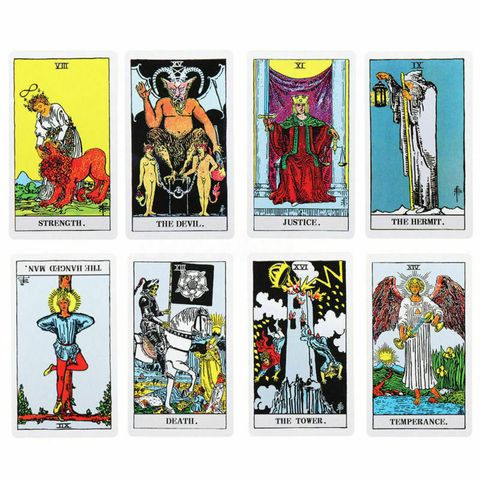
Tarot decks are structured around a standard composition of 78 cards, comprising the 22 Major Arcana and 56 Minor Arcana, a format that emerged in 15th-century Italy and became foundational for divinatory practices. The Major Arcana cards illustrate an archetypal journey through life's transformative stages, with each card embodying symbolic figures or events; for instance, The Fool represents innocence, new beginnings, and the leap into the unknown. These cards, often called trumps, depict universal themes influenced by Renaissance humanism and Christian iconography, serving as a narrative arc from potential to enlightenment in cartomantic interpretations.
The Minor Arcana, mirroring aspects of everyday existence, are organized into four suits—Wands (fire, creativity), Cups (water, emotions), Swords (air, intellect), and Pentacles (earth, material concerns)—each containing 14 cards: ten numbered pips (ace through ten) and four court cards (page, knight, queen, king). This suit-based division draws from Italian playing card traditions, with the pips illustrating escalating intensities within their elemental domains, while court cards personify roles or personalities in relational dynamics. In divination, the Minor Arcana provide practical insights into mundane challenges and opportunities, contrasting the Major Arcana's broader existential focus.
Among the earliest surviving examples is the Visconti-Sforza deck, commissioned around 1450 in Milan for the noble Visconti and Sforza families, featuring hand-painted gold-leaf illustrations by artist Bonifacio Bembo; approximately 61 to 69 cards remain, preserved across institutions like Yale University's Beinecke Rare Book & Manuscript Library and the Morgan Library & Museum. This deck established the iconic imagery, such as triumphant allegorical figures in the Major Arcana, though it was originally used for gaming rather than fortune-telling. By the 17th and 18th centuries, the Tarot de Marseille emerged in southern France as a printed standard, adapting Italian designs with simplified, bold woodblock illustrations that emphasized numerological and symbolic clarity, making it a benchmark for traditional European cartomantic readings.
In cartomantic applications, particularly those evolving from 18th-century occult traditions, tarot cards are often interpreted based on their orientation: upright for direct manifestation of the card's energy or reversed for internalized, blocked, or inverted expressions. This dual reading, pioneered by French occultist Jean-Baptiste Alliette (Etteilla) around 1780, adds nuance to interpretations; for example, The Tower upright signifies abrupt upheaval or revelation, whereas reversed it may indicate delayed crisis or personal avoidance of necessary change. Such positional meanings enhance the deck's versatility in exploring subconscious patterns, though traditional Marseille-style readings sometimes forgo reversals in favor of contextual suit interactions.
Specialized Decks (Lenormand and Oracle).
The Lenormand deck, consisting of 36 cards, emerged in early 19th-century Germany as a specialized tool for cartomancy, distinct from both playing cards and tarot systems. Named after the renowned French fortune-teller Marie Anne Adelaide Lenormand (1772–1843), who was celebrated for her consultations with figures such as Napoleon Bonaparte and Empress Joséphine, the deck draws its association from her legacy rather than direct authorship, as no evidence confirms she created it. Each card features simple, symbolic imagery paired with a corresponding playing card inset, such as the Rider representing news or movement and the House symbolizing home or security. Interpretations in Lenormand emphasize card combinations over individual meanings, where proximity or sequences in a layout—often arranged in a Grand Tableau of all 36 cards—create contextual narratives, such as the Rider preceding the House to indicate incoming domestic news.
Oracle decks represent a highly flexible category of cartomancy tools, typically comprising 30 to 50 cards with custom designs tailored to specific themes, allowing for intuitive guidance rather than rigid structures. Unlike the fixed symbolism of tarot, oracle cards feature thematic imagery—such as angels for spiritual messages or animals for instinctual wisdom—to evoke personal insights during readings, often without predefined spreads. These decks proliferated in the 20th century amid the New Age movement, which popularized esoteric practices for self-reflection and healing, leading to diverse creations like Doreen Virtue's angel oracles that emphasize uplifting, affirmative interpretations.
While influenced by broader cartomantic traditions including tarot, both Lenormand and oracle decks prioritize practical, everyday divination over archetypal exploration. Their rise reflects a shift toward accessible, thematic fortune-telling in modern esoteric communities.
Methods and Techniques.
Preparation and Card Handling.
In cartomancy, selecting an appropriate deck is the foundational step, guided by the specific tradition and purpose of the reading. Early practitioners, such as the French occultist Etteilla (Jean-Baptiste Alliette), preferred a 78-card tarot deck adapted from the Tarot de Marseille, featuring custom designs with Egyptian-inspired symbolism to align with esoteric interpretations. For simpler forms like playing card cartomancy, a standard 52-card deck suffices, sometimes augmented with a significator card representing the querent.
Preparation emphasizes creating a conducive atmosphere for divination, including a quiet environment and mental focus to ensure clarity of intent. The querent is instructed to concentrate deeply on their question or concern, fostering a personal connection with the cards before handling begins. This ritualistic mindset, introduced in structured cartomancy by Etteilla in the late 18th century, transforms the deck from a mere tool into a conduit for insight.
Shuffling infuses the deck with the querent's energy and randomizes the cards, a practice central to traditional methods. The querent typically shuffles thoroughly, using techniques such as the overhand shuffle—pulling small packets from the top with the thumb—or the riffle shuffle, which interleaves the two halves of the deck for even distribution. In Etteilla's system, the shuffled deck is then cut into three piles by the querent, with the central pile selected to proceed, symbolizing a balance of past, present, and future influences. Incantations or silent affirmations may accompany shuffling to embed intent, though historical accounts stress the querent's direct involvement over elaborate ceremonies.
Drawing cards follows shuffling and cutting, with methods varying by tradition for quick or detailed insights. Single card pulls provide rapid guidance, drawn from the top of the deck after focus is established. For selection-based draws, the deck may be fanned out, allowing the querent to choose intuitively. In tarot-based cartomancy, reversals—cards appearing upside down—are integral, a innovation by Etteilla that doubles interpretive layers by denoting blocked, internalized, or contrary energies to the upright meaning. This orientation-based handling, formalized in his 1783–1785 works, requires careful placement to preserve card direction during the session.
Common Spreads and Layouts.
In cartomancy, spreads are deliberate arrangements of cards following the shuffling and cutting process, designed to organize the reading around a querent's question or general life inquiry by assigning positional meanings to reveal temporal, situational, or relational insights. These layouts provide a structured framework that varies by deck tradition, enabling diviners to navigate the cards' collective narrative while adapting to the query's scope. Common across practices, they range from simple linear patterns for quick guidance to complex grids for holistic overviews.
For playing card cartomancy, the three-card spread serves as an accessible entry point, involving the selection and placement of three cards in a horizontal line to denote the past, present, and future, thereby offering a streamlined temporal progression of influences or events. A more expansive option is the horseshoe spread, which draws seven cards arranged in a downward-curving arc resembling a horseshoe; this layout encompasses the recent past at the starting position, the immediate present, concealed influences, obstacles, external factors, recommended attitudes or actions, and the probable outcome, providing a multifaceted life overview suitable for broader queries. Both spreads leverage the standard 52-card deck and emphasize progression and balance in their design.
Tarot-specific spreads often employ more intricate formations to capture nuanced layers of a situation. The Celtic Cross, a ten-card pattern dating back to at least the early 20th century as documented in Arthur Edward Waite's writings, consists of a central cross of six cards—central (heart of the matter), crossing (challenges), above (crown or goal), below (subconscious root), left (recent past), right (near future)—flanked by a vertical staff of four cards for the querent's self or attitude, environment or surroundings, hopes and fears, and ultimate outcome. For relational inquiries, the relationship cross spread utilizes six cards configured in a cross shape to probe partnership dynamics, with positions typically covering one partner's viewpoint, the other's perspective, the connection's foundation, current energies, obstacles, and evolving potential.
In Lenormand cartomancy, the Grand Tableau represents the pinnacle of elaborate layouts, incorporating all 36 cards into a large grid—commo
This episode includes AI-generated content.
mostra meno
Tarot Card Systems.
Tarot decks are structured around a standard composition of 78 cards, comprising the 22 Major Arcana and 56 Minor Arcana, a format that emerged in 15th-century Italy and became foundational for divinatory practices. The Major Arcana cards illustrate an archetypal journey through life's transformative stages, with each card embodying symbolic figures or events; for instance, The Fool represents innocence, new beginnings, and the leap into the unknown. These cards, often called trumps, depict universal themes influenced by Renaissance humanism and Christian iconography, serving as a narrative arc from potential to enlightenment in cartomantic interpretations.
The Minor Arcana, mirroring aspects of everyday existence, are organized into four suits—Wands (fire, creativity), Cups (water, emotions), Swords (air, intellect), and Pentacles (earth, material concerns)—each containing 14 cards: ten numbered pips (ace through ten) and four court cards (page, knight, queen, king). This suit-based division draws from Italian playing card traditions, with the pips illustrating escalating intensities within their elemental domains, while court cards personify roles or personalities in relational dynamics. In divination, the Minor Arcana provide practical insights into mundane challenges and opportunities, contrasting the Major Arcana's broader existential focus.
Among the earliest surviving examples is the Visconti-Sforza deck, commissioned around 1450 in Milan for the noble Visconti and Sforza families, featuring hand-painted gold-leaf illustrations by artist Bonifacio Bembo; approximately 61 to 69 cards remain, preserved across institutions like Yale University's Beinecke Rare Book & Manuscript Library and the Morgan Library & Museum. This deck established the iconic imagery, such as triumphant allegorical figures in the Major Arcana, though it was originally used for gaming rather than fortune-telling. By the 17th and 18th centuries, the Tarot de Marseille emerged in southern France as a printed standard, adapting Italian designs with simplified, bold woodblock illustrations that emphasized numerological and symbolic clarity, making it a benchmark for traditional European cartomantic readings.
In cartomantic applications, particularly those evolving from 18th-century occult traditions, tarot cards are often interpreted based on their orientation: upright for direct manifestation of the card's energy or reversed for internalized, blocked, or inverted expressions. This dual reading, pioneered by French occultist Jean-Baptiste Alliette (Etteilla) around 1780, adds nuance to interpretations; for example, The Tower upright signifies abrupt upheaval or revelation, whereas reversed it may indicate delayed crisis or personal avoidance of necessary change. Such positional meanings enhance the deck's versatility in exploring subconscious patterns, though traditional Marseille-style readings sometimes forgo reversals in favor of contextual suit interactions.
Specialized Decks (Lenormand and Oracle).
The Lenormand deck, consisting of 36 cards, emerged in early 19th-century Germany as a specialized tool for cartomancy, distinct from both playing cards and tarot systems. Named after the renowned French fortune-teller Marie Anne Adelaide Lenormand (1772–1843), who was celebrated for her consultations with figures such as Napoleon Bonaparte and Empress Joséphine, the deck draws its association from her legacy rather than direct authorship, as no evidence confirms she created it. Each card features simple, symbolic imagery paired with a corresponding playing card inset, such as the Rider representing news or movement and the House symbolizing home or security. Interpretations in Lenormand emphasize card combinations over individual meanings, where proximity or sequences in a layout—often arranged in a Grand Tableau of all 36 cards—create contextual narratives, such as the Rider preceding the House to indicate incoming domestic news.
Oracle decks represent a highly flexible category of cartomancy tools, typically comprising 30 to 50 cards with custom designs tailored to specific themes, allowing for intuitive guidance rather than rigid structures. Unlike the fixed symbolism of tarot, oracle cards feature thematic imagery—such as angels for spiritual messages or animals for instinctual wisdom—to evoke personal insights during readings, often without predefined spreads. These decks proliferated in the 20th century amid the New Age movement, which popularized esoteric practices for self-reflection and healing, leading to diverse creations like Doreen Virtue's angel oracles that emphasize uplifting, affirmative interpretations.
While influenced by broader cartomantic traditions including tarot, both Lenormand and oracle decks prioritize practical, everyday divination over archetypal exploration. Their rise reflects a shift toward accessible, thematic fortune-telling in modern esoteric communities.
Methods and Techniques.
Preparation and Card Handling.
In cartomancy, selecting an appropriate deck is the foundational step, guided by the specific tradition and purpose of the reading. Early practitioners, such as the French occultist Etteilla (Jean-Baptiste Alliette), preferred a 78-card tarot deck adapted from the Tarot de Marseille, featuring custom designs with Egyptian-inspired symbolism to align with esoteric interpretations. For simpler forms like playing card cartomancy, a standard 52-card deck suffices, sometimes augmented with a significator card representing the querent.
Preparation emphasizes creating a conducive atmosphere for divination, including a quiet environment and mental focus to ensure clarity of intent. The querent is instructed to concentrate deeply on their question or concern, fostering a personal connection with the cards before handling begins. This ritualistic mindset, introduced in structured cartomancy by Etteilla in the late 18th century, transforms the deck from a mere tool into a conduit for insight.
Shuffling infuses the deck with the querent's energy and randomizes the cards, a practice central to traditional methods. The querent typically shuffles thoroughly, using techniques such as the overhand shuffle—pulling small packets from the top with the thumb—or the riffle shuffle, which interleaves the two halves of the deck for even distribution. In Etteilla's system, the shuffled deck is then cut into three piles by the querent, with the central pile selected to proceed, symbolizing a balance of past, present, and future influences. Incantations or silent affirmations may accompany shuffling to embed intent, though historical accounts stress the querent's direct involvement over elaborate ceremonies.
Drawing cards follows shuffling and cutting, with methods varying by tradition for quick or detailed insights. Single card pulls provide rapid guidance, drawn from the top of the deck after focus is established. For selection-based draws, the deck may be fanned out, allowing the querent to choose intuitively. In tarot-based cartomancy, reversals—cards appearing upside down—are integral, a innovation by Etteilla that doubles interpretive layers by denoting blocked, internalized, or contrary energies to the upright meaning. This orientation-based handling, formalized in his 1783–1785 works, requires careful placement to preserve card direction during the session.
Common Spreads and Layouts.
In cartomancy, spreads are deliberate arrangements of cards following the shuffling and cutting process, designed to organize the reading around a querent's question or general life inquiry by assigning positional meanings to reveal temporal, situational, or relational insights. These layouts provide a structured framework that varies by deck tradition, enabling diviners to navigate the cards' collective narrative while adapting to the query's scope. Common across practices, they range from simple linear patterns for quick guidance to complex grids for holistic overviews.
For playing card cartomancy, the three-card spread serves as an accessible entry point, involving the selection and placement of three cards in a horizontal line to denote the past, present, and future, thereby offering a streamlined temporal progression of influences or events. A more expansive option is the horseshoe spread, which draws seven cards arranged in a downward-curving arc resembling a horseshoe; this layout encompasses the recent past at the starting position, the immediate present, concealed influences, obstacles, external factors, recommended attitudes or actions, and the probable outcome, providing a multifaceted life overview suitable for broader queries. Both spreads leverage the standard 52-card deck and emphasize progression and balance in their design.
Tarot-specific spreads often employ more intricate formations to capture nuanced layers of a situation. The Celtic Cross, a ten-card pattern dating back to at least the early 20th century as documented in Arthur Edward Waite's writings, consists of a central cross of six cards—central (heart of the matter), crossing (challenges), above (crown or goal), below (subconscious root), left (recent past), right (near future)—flanked by a vertical staff of four cards for the querent's self or attitude, environment or surroundings, hopes and fears, and ultimate outcome. For relational inquiries, the relationship cross spread utilizes six cards configured in a cross shape to probe partnership dynamics, with positions typically covering one partner's viewpoint, the other's perspective, the connection's foundation, current energies, obstacles, and evolving potential.
In Lenormand cartomancy, the Grand Tableau represents the pinnacle of elaborate layouts, incorporating all 36 cards into a large grid—commo
This episode includes AI-generated content.
Informazioni
| Autore | Popular Culture and Religion. |
| Organizzazione | Popular Culture and Religion. |
| Sito | - |
| Tag |
-
|

Copyright 2026 - Spreaker Inc. an iHeartMedia Company

Commenti