Contenuto generato con l’IA
Trascritto
21 - Cartomancy. (part 1).
19 giu 2026 ·
18 min. 30 sec.
Scarica e ascolta ovunque
Scarica i tuoi episodi preferiti e goditi l'ascolto, ovunque tu sia! Iscriviti o accedi ora per ascoltare offline.
21 - Cartomancy. (part 1).
Questa trascrizione automatica è offerta da
Sounder.AI
Questa è una trascrizione generata automaticamente. Si prega di notare che non è garantita la completa accuratezza.
Descrizione
Cartomancy. (part 1). Cartomancy is a form of divination that involves interpreting a deck of cards, typically playing cards or specialized decks like tarot, to gain insights into personal circumstances,...
mostra di più
Cartomancy. (part 1).
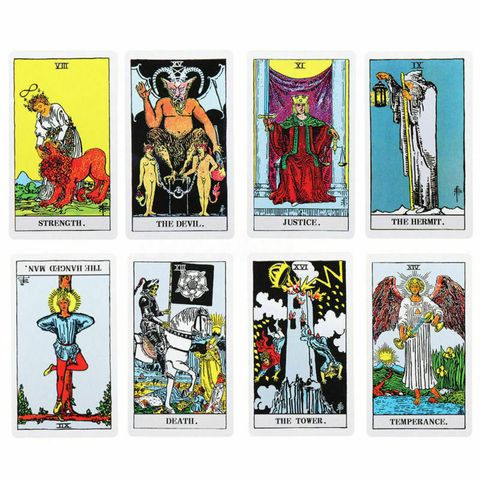
Cartomancy is a form of divination that involves interpreting a deck of cards, typically playing cards or specialized decks like tarot, to gain insights into personal circumstances, future events, or spiritual matters. The practice relies on symbolic meanings assigned to individual cards or combinations, often arranged in spreads or layouts to form narratives or predictions.
The origins of cartomancy trace back to Europe in the 14th century, shortly after playing cards were introduced from the Islamic world, with early divinatory uses documented in the 15th century through simple fortune-telling books that paired card draws with pre-written interpretations. By the early 16th century, tarot cards—initially developed in Italy around 1450 as a card game—began to be adapted for esoteric purposes, as evidenced in Teofilo Folengo's 1527 work, which described using them to derive destinies. The practice gained significant traction in late 18th-century France amid social upheavals like the Revolution, where it served both as entertainment and a tool for navigating uncertainty.
Key developments include the formalization of card meanings by Jean-Baptiste Alliette, known as Etteilla, who in 1770 published the first book on cartomancy and created dedicated divination decks blending Egyptian symbolism with playing cards. Prominent figures such as Marie Anne Lenormand further elevated its status; arriving in Paris in 1786, she practiced cartomancy for over 40 years, advising elites including Napoleon and Robespierre, and her fame led to decks named after her, such as the 36-card Petit Lenormand.[4] In the 19th century, occultists like Éliphas Lévi integrated cartomancy with Kabbalistic and Hermetic traditions, transforming tarot into a cornerstone of Western esotericism.
Today, cartomancy encompasses diverse traditions, from traditional playing card readings to modern oracle decks, and remains popular in spiritual and self-reflective practices worldwide, though it has historically faced skepticism and legal restrictions in various cultures.
Definition and Overview.
Etymology and Terminology.
The term cartomancy derives from the combining form carto-, ultimately from the Greek khártēs, meaning "leaf of paper" or "papyrus sheet," and -mancy, from the Greek manteía, meaning "divination" or "prophecy." This etymological structure reflects the practice's reliance on paper cards as a medium for prophetic insight, blending Latin influences via carta (paper) with Greek divinatory roots. The word first entered the English language in 1852, denoting "divination by means of playing cards."
Early variants of the term appeared in European languages prior to its English adoption; for instance, the Italian cartomanzia is attested as early as 1450 in references to using playing cards for fortune-telling and revealing hidden matters such as fate or destiny. These initial uses often described informal, ad hoc practices rather than formalized systems, evolving from broader folk traditions of cleromancy (divination by lots).
Key terminology in cartomancy includes cartomancer, referring to the practitioner who interprets cards for divination purposes. A significator is a designated card selected to represent the querent (the person seeking the reading) or a specific aspect of their inquiry, often chosen from court cards based on age, gender, or personality traits. These terms establish a foundational vocabulary that distinguishes cartomancy from related practices like tarot divination.
Core Principles and Practices.
Cartomancy operates on the core principle that card symbols serve as conduits to the practitioner's intuition, enabling access to psychological or spiritual insights that illuminate aspects of the past, present, or future. Unlike deterministic forecasting, this divinatory art emphasizes reflective guidance, where cards act as projective tools for self-exploration and meaning-making rather than fixed prophecies. The practice draws on the symbolic richness of decks to evoke subconscious associations, fostering a dialogue between the conscious mind and deeper layers of awareness.
The basic process of a cartomancy reading typically begins with the querent formulating a clear question or focusing intent on a life matter, followed by the cartomancer shuffling the deck to infuse it with energy. Cards are then drawn and arranged in a spread, such as a linear layout representing temporal progression, with interpretations derived from the interplay of suits (symbolizing elemental or thematic domains like emotions or challenges), numerical values (indicating stages or intensities), and evocative imagery (prompting personal symbolic resonance). This methodical yet flexible approach relies heavily on the reader's intuitive synthesis to tailor meanings to the querent's circumstances, transforming abstract symbols into relevant counsel.
The cartomancer's role is pivotal, blending symbolic knowledge with intuitive discernment to provide transformative insights.
History.
Origins and Early Development.
The origins of cartomancy trace back to the broader history of playing cards, which emerged in China during the Tang Dynasty (618–907 CE) as narrow slips of paper resembling dominoes, inspired by printed paper money used in gambling games. These early cards spread westward through trade routes, reaching Persia and eventually the Mamluk Sultanate in Egypt by the 13th century, where they evolved into structured decks known as "na'ib" or Mamluk cards.
By the mid-14th century, Mamluk playing cards featured four suits—coins, cups, swords, and polo sticks—each with 10 numbered cards and three court cards (king, deputy, and second deputy), reflecting Islamic cultural elements like the polo sticks symbolizing aristocratic sports. These suits served as direct precursors to European designs, with coins becoming pentacles or diamonds, cups remaining as a suit symbol, swords staying similar, and polo sticks transforming into batons, clubs, or wands to suit local familiarity. Arab traders and sailors introduced these cards to European ports in Italy and Spain around the 1370s, marking their rapid proliferation across the continent by the late 14th century, initially for gaming but soon adapting to other uses.
The earliest documented instances of cartomancy, or divination using playing cards, appeared in Europe in the late 15th century, with cards employed for moral guidance and predictive fortune-telling in Italy. Works like Lorenzo Spirito Gualtieri's Libro delle Sorti (Book of Lots), completed as a manuscript in 1482, reflected the Renaissance cultural shift toward using chance and prophecy for divination, paralleling emerging card-based sortilege practices. This work, later printed in multiple editions starting around 1488, built on the moralistic tone of earlier lot books while incorporating visual elements that echoed card imagery.
European Popularization.
The popularization of cartomancy in Europe gained momentum during the 16th century, particularly through the dissemination of printed fortune-telling books in Germany and France, which transformed informal card-reading practices into more accessible and structured methods. These early publications, such as Teofilo Folengo's 1527 work documenting tarot divination, introduced systematic interpretations of cards drawn from standard playing decks introduced to Europe in the previous century. In these texts, suits were often associated with social classes, reflecting the hierarchical structure of Renaissance society—for instance, hearts symbolizing the clergy or nobility, diamonds the merchant class, clubs the peasantry, and spades the military or laborers—allowing readers to predict outcomes related to status, relationships, and daily affairs.
Romani communities played a pivotal role in spreading these practices across Europe starting from the 15th century, as they migrated from Eastern Europe and integrated divination traditions into their nomadic lifestyles, adapting card-based fortune-telling to local customs and popularizing it among both rural and urban populations. Arriving in Western Europe around 1417, Romani women in particular were noted in historical records for employing cards alongside palmistry and other forms of prognostication, often as a means of livelihood amid marginalization, which embedded cartomancy deeper into folk culture despite associations with superstition and occasional persecution. This dissemination helped bridge early Italian and German card games with broader European adoption, fostering oral and printed traditions that emphasized intuitive readings over gaming.
By the 18th century, during the Enlightenment, cartomancy evolved with more esoteric refinements, exemplified by the work of Jean-Baptiste Alliette, known as Etteilla, who published Manière de se récréer avec le jeu de cartes nommées tarots in 1783—the first dedicated guide to tarot cartomancy. This treatise outlined specific spreads, upright and reversed meanings, and correspondences between cards, astrology, and the four classical elements (e.g., hearts or cups linked to water and emotions), shifting interpretations from mere social omens to psychological and spiritual insights. In 1789, Etteilla released the first esoteric tarot deck, Livre de Thot, explicitly designed for divination rather than play, complete with Egyptian-inspired symbolism and a 78-card structure, marking a seminal advancement that professionalized the practice and influenced subsequent European occult traditions.
Modern Evolution.
In the 19th century, cartomancy experienced a significant occult revival, particularly through the works of French esotericist Éliphas Lévi, who profoundly influenced tarot interpretation by.....
This episode includes AI-generated content.
mostra meno
Cartomancy is a form of divination that involves interpreting a deck of cards, typically playing cards or specialized decks like tarot, to gain insights into personal circumstances, future events, or spiritual matters. The practice relies on symbolic meanings assigned to individual cards or combinations, often arranged in spreads or layouts to form narratives or predictions.
The origins of cartomancy trace back to Europe in the 14th century, shortly after playing cards were introduced from the Islamic world, with early divinatory uses documented in the 15th century through simple fortune-telling books that paired card draws with pre-written interpretations. By the early 16th century, tarot cards—initially developed in Italy around 1450 as a card game—began to be adapted for esoteric purposes, as evidenced in Teofilo Folengo's 1527 work, which described using them to derive destinies. The practice gained significant traction in late 18th-century France amid social upheavals like the Revolution, where it served both as entertainment and a tool for navigating uncertainty.
Key developments include the formalization of card meanings by Jean-Baptiste Alliette, known as Etteilla, who in 1770 published the first book on cartomancy and created dedicated divination decks blending Egyptian symbolism with playing cards. Prominent figures such as Marie Anne Lenormand further elevated its status; arriving in Paris in 1786, she practiced cartomancy for over 40 years, advising elites including Napoleon and Robespierre, and her fame led to decks named after her, such as the 36-card Petit Lenormand.[4] In the 19th century, occultists like Éliphas Lévi integrated cartomancy with Kabbalistic and Hermetic traditions, transforming tarot into a cornerstone of Western esotericism.
Today, cartomancy encompasses diverse traditions, from traditional playing card readings to modern oracle decks, and remains popular in spiritual and self-reflective practices worldwide, though it has historically faced skepticism and legal restrictions in various cultures.
Definition and Overview.
Etymology and Terminology.
The term cartomancy derives from the combining form carto-, ultimately from the Greek khártēs, meaning "leaf of paper" or "papyrus sheet," and -mancy, from the Greek manteía, meaning "divination" or "prophecy." This etymological structure reflects the practice's reliance on paper cards as a medium for prophetic insight, blending Latin influences via carta (paper) with Greek divinatory roots. The word first entered the English language in 1852, denoting "divination by means of playing cards."
Early variants of the term appeared in European languages prior to its English adoption; for instance, the Italian cartomanzia is attested as early as 1450 in references to using playing cards for fortune-telling and revealing hidden matters such as fate or destiny. These initial uses often described informal, ad hoc practices rather than formalized systems, evolving from broader folk traditions of cleromancy (divination by lots).
Key terminology in cartomancy includes cartomancer, referring to the practitioner who interprets cards for divination purposes. A significator is a designated card selected to represent the querent (the person seeking the reading) or a specific aspect of their inquiry, often chosen from court cards based on age, gender, or personality traits. These terms establish a foundational vocabulary that distinguishes cartomancy from related practices like tarot divination.
Core Principles and Practices.
Cartomancy operates on the core principle that card symbols serve as conduits to the practitioner's intuition, enabling access to psychological or spiritual insights that illuminate aspects of the past, present, or future. Unlike deterministic forecasting, this divinatory art emphasizes reflective guidance, where cards act as projective tools for self-exploration and meaning-making rather than fixed prophecies. The practice draws on the symbolic richness of decks to evoke subconscious associations, fostering a dialogue between the conscious mind and deeper layers of awareness.
The basic process of a cartomancy reading typically begins with the querent formulating a clear question or focusing intent on a life matter, followed by the cartomancer shuffling the deck to infuse it with energy. Cards are then drawn and arranged in a spread, such as a linear layout representing temporal progression, with interpretations derived from the interplay of suits (symbolizing elemental or thematic domains like emotions or challenges), numerical values (indicating stages or intensities), and evocative imagery (prompting personal symbolic resonance). This methodical yet flexible approach relies heavily on the reader's intuitive synthesis to tailor meanings to the querent's circumstances, transforming abstract symbols into relevant counsel.
The cartomancer's role is pivotal, blending symbolic knowledge with intuitive discernment to provide transformative insights.
History.
Origins and Early Development.
The origins of cartomancy trace back to the broader history of playing cards, which emerged in China during the Tang Dynasty (618–907 CE) as narrow slips of paper resembling dominoes, inspired by printed paper money used in gambling games. These early cards spread westward through trade routes, reaching Persia and eventually the Mamluk Sultanate in Egypt by the 13th century, where they evolved into structured decks known as "na'ib" or Mamluk cards.
By the mid-14th century, Mamluk playing cards featured four suits—coins, cups, swords, and polo sticks—each with 10 numbered cards and three court cards (king, deputy, and second deputy), reflecting Islamic cultural elements like the polo sticks symbolizing aristocratic sports. These suits served as direct precursors to European designs, with coins becoming pentacles or diamonds, cups remaining as a suit symbol, swords staying similar, and polo sticks transforming into batons, clubs, or wands to suit local familiarity. Arab traders and sailors introduced these cards to European ports in Italy and Spain around the 1370s, marking their rapid proliferation across the continent by the late 14th century, initially for gaming but soon adapting to other uses.
The earliest documented instances of cartomancy, or divination using playing cards, appeared in Europe in the late 15th century, with cards employed for moral guidance and predictive fortune-telling in Italy. Works like Lorenzo Spirito Gualtieri's Libro delle Sorti (Book of Lots), completed as a manuscript in 1482, reflected the Renaissance cultural shift toward using chance and prophecy for divination, paralleling emerging card-based sortilege practices. This work, later printed in multiple editions starting around 1488, built on the moralistic tone of earlier lot books while incorporating visual elements that echoed card imagery.
European Popularization.
The popularization of cartomancy in Europe gained momentum during the 16th century, particularly through the dissemination of printed fortune-telling books in Germany and France, which transformed informal card-reading practices into more accessible and structured methods. These early publications, such as Teofilo Folengo's 1527 work documenting tarot divination, introduced systematic interpretations of cards drawn from standard playing decks introduced to Europe in the previous century. In these texts, suits were often associated with social classes, reflecting the hierarchical structure of Renaissance society—for instance, hearts symbolizing the clergy or nobility, diamonds the merchant class, clubs the peasantry, and spades the military or laborers—allowing readers to predict outcomes related to status, relationships, and daily affairs.
Romani communities played a pivotal role in spreading these practices across Europe starting from the 15th century, as they migrated from Eastern Europe and integrated divination traditions into their nomadic lifestyles, adapting card-based fortune-telling to local customs and popularizing it among both rural and urban populations. Arriving in Western Europe around 1417, Romani women in particular were noted in historical records for employing cards alongside palmistry and other forms of prognostication, often as a means of livelihood amid marginalization, which embedded cartomancy deeper into folk culture despite associations with superstition and occasional persecution. This dissemination helped bridge early Italian and German card games with broader European adoption, fostering oral and printed traditions that emphasized intuitive readings over gaming.
By the 18th century, during the Enlightenment, cartomancy evolved with more esoteric refinements, exemplified by the work of Jean-Baptiste Alliette, known as Etteilla, who published Manière de se récréer avec le jeu de cartes nommées tarots in 1783—the first dedicated guide to tarot cartomancy. This treatise outlined specific spreads, upright and reversed meanings, and correspondences between cards, astrology, and the four classical elements (e.g., hearts or cups linked to water and emotions), shifting interpretations from mere social omens to psychological and spiritual insights. In 1789, Etteilla released the first esoteric tarot deck, Livre de Thot, explicitly designed for divination rather than play, complete with Egyptian-inspired symbolism and a 78-card structure, marking a seminal advancement that professionalized the practice and influenced subsequent European occult traditions.
Modern Evolution.
In the 19th century, cartomancy experienced a significant occult revival, particularly through the works of French esotericist Éliphas Lévi, who profoundly influenced tarot interpretation by.....
This episode includes AI-generated content.
Informazioni
| Autore | Popular Culture and Religion. |
| Organizzazione | Popular Culture and Religion. |
| Sito | - |
| Tag |
-
|

Copyright 2026 - Spreaker Inc. an iHeartMedia Company

Commenti