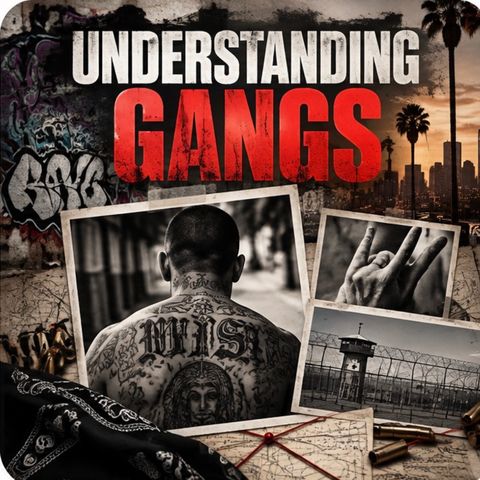
Episodi & Post
Episodi
Post
Trascritto
16 NOV 2026 · A threatening Instagram post, a disrespectful rap lyric, or a video mocking a rival gang can transform an existing street conflict into a public confrontation. Social media has changed how gangs communicate, establish reputations, recruit members, and escalate rivalries. This episode examines the psychology of online disrespect, the phenomenon sometimes called internet banging, and how investigators use digital evidence to understand gang-related violence.
Trascritto
15 NOV 2026 · This episode explores two of the most reputable, evidence-based initiatives addressing gang involvement in the United States. We examine Homeboy Industries in Los Angeles, the world’s largest gang rehabilitation and re-entry program, and the G.R.E.A.T. (Gang Resistance Education and Training) Program, a nationwide school-based prevention effort. Discover their histories, services, rigorous evaluations, and measurable impacts on reducing recidivism and gang joining. Learn how these models offer hope, structure, and long-term support to individuals and communities. (Approximately 15 minutes)
Trascritto
10 NOV 2026 · August 1963. A Royal Mail train is ambushed in the English countryside, and £2.6 million disappears into the darkness. The robbers leave behind an injured train driver, a manipulated railway signal, and very few immediate clues. Scotland Yard faces a daunting investigation involving criminal informants, forensic evidence, and a remote farmhouse that becomes the key to unraveling the conspiracy. This episode follows the detectives who transformed one of Britain's most audacious robberies into one of its most famous manhunts.
Trascritto
8 NOV 2026 · Joining a gang can provide protection, identity, and belonging. Leaving one can threaten all three. This episode examines the psychological and practical barriers to gang disengagement, including retaliation, loyalty, fear, and the difficult process of rebuilding a life outside a criminal organization.
Trascritto
8 NOV 2026 · Why do prisons, institutions designed to control criminal behavior, sometimes become breeding grounds for powerful criminal organizations? This episode examines how fear, protection, racial divisions, and institutional power struggles contribute to prison gang formation. We explore how organizations that begin behind bars can extend their influence into neighborhoods, drug markets, and criminal networks far beyond prison walls.
Trascritto
2 NOV 2026 · Chicago's early organized crime economy depended heavily on prostitution, gambling, and corrupt protection arrangements. This episode examines historical evidence of trafficking and coercion within that economy, while distinguishing exploited women from those who participated voluntarily. It explores how criminal intermediaries and compromised institutions could make exploitation difficult to challenge.
Trascritto
1 NOV 2026 · MS-13 is best known for its violence, territorial control, and transnational criminal connections, but some of its members have also participated in human trafficking and sexual exploitation. This episode examines how gang intimidation, threats, and organizational loyalty can become instruments of coercion. It also explores why trafficking investigations require authorities to understand both the criminal organization and the vulnerabilities of its victims.
Trascritto
22 OTT 2026 · The Millennium Dome gang invested considerable effort in planning its robbery, yet failed to recognize that police were anticipating its movements. How can experienced criminals become so confident in a plan that they overlook critical vulnerabilities? This episode explores overconfidence bias, groupthink, perceived control, and the psychological effects of elaborate criminal preparation. It examines how the same mental processes that support decisive action can also create dangerous blind spots.
Trascritto
15 OTT 2026 · St. Louis, Missouri, has experienced some of the highest homicide rates among major American cities. But understanding its history of violence requires looking beyond crime statistics. In this episode, we explore how industrial decline, neighborhood identity, social inequality, and changing gang structures shaped parts of the city's history. Drawing on criminology and psychology, we examine why street gangs emerge, how violence can persist across generations, and what communities can do to interrupt these cycles.
Trascritto
11 OTT 2026 · The St. Valentine’s Day Massacre was more than an infamous Chicago shooting. It reflected a violent struggle for control of criminal markets during Prohibition, when territorial disputes, retaliation, and competition between rival organizations could escalate into spectacular acts of violence. This episode examines the social dynamics of gang warfare, the role of reputation and intimidation, and why criminal organizations sometimes use extreme violence to establish dominance.
Informazioni
| Autore | Circle Of Insight Productions |
| Organizzazione | Circle Of Insight Productions |
| Categorie | Cultura e società , Scienze sociali , Governo |
| Sito | - |
| - |

Copyright 2026 - Spreaker Inc. an iHeartMedia Company
