Sostieni il Podcast
Contatti
Info
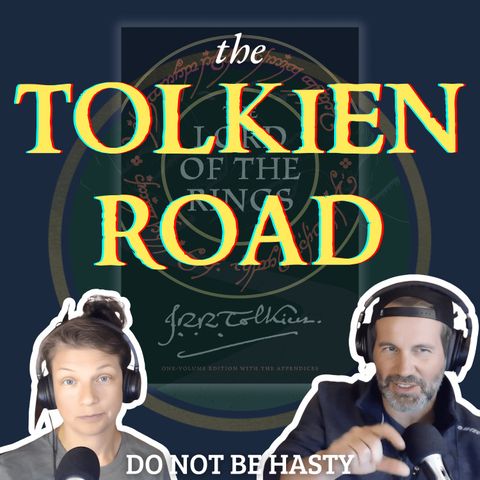
Embark upon a wondrous journey through the realms of Middle-earth and beyond with the Tolkien Road, a podcast dedicated to the enchanting tales and writings of JRR Tolkien. Come, join...
mostra di più
Embark upon a wondrous journey through the realms of Middle-earth and beyond with the Tolkien Road, a podcast dedicated to the enchanting tales and writings of JRR Tolkien. Come, join John, Greta, and our mighty Fellowship as we delve deep into the magic that lingers within the pages of these timeless legends.
And always remember: DO NOT BE HASTY!!!
mostra meno
And always remember: DO NOT BE HASTY!!!
Sostieni il Podcast
Episodi & Post
Episodi
Post
Trascritto
7 OTT 2026 · What exactly is Unfinished Tales—and why did Christopher Tolkien choose to publish his father’s unfinished writings at all?
In this episode of The Tolkien Road, we begin a new journey into Tolkien’s posthumously published legendarium by exploring the history, purpose, and editorial philosophy behind Unfinished Tales of Númenor and Middle-earth.
- 00:00 — Introduction: Beginning Unfinished Tales
- 06:36 — Tolkien Quote of the Week: Why Fantasy Matters
- 08:52 — What Is Unfinished Tales?
- 10:14 — Why This Book Was So Important
- 11:38 — Christopher Tolkien Takes Up His Father’s Work
- 12:56 — Why Unfinished Tales Is Harder Than The Silmarillion
- 14:31 — Unfinished Tales as a Bridge to The History of Middle-earth
- 16:54 — Christopher Tolkien’s Experience with The Silmarillion
- 20:28 — The Three Choices Christopher Tolkien Faced
- 21:33 — Choosing Textual History Instead of New Stories
- 24:14 — Why Christopher Changed His Editorial Approach
- 27:36 — Why Publish Tolkien’s Unfinished Material?
- 28:23 — Do Tolkien Fans Really Want All the Details?
- 44:59 — Christopher Tolkien’s Lasting Editorial Legacy
- 45:42 — Listener Correspondence
What Is Unfinished Tales?
- Unfinished Tales of Númenor and Middle-earth was published in 1980
- It followed The Silmarillion, which Christopher Tolkien published in 1977
- The book gathers incomplete narratives, drafts, notes, and alternate versions of stories from across the legendarium
- Some stories are relatively complete, while others require extensive editorial explanation
- Christopher frequently interrupts the narrative to explain manuscript differences, chronology, textual problems, and editorial choices
Why It Is Different from The Silmarillion
- The Silmarillion was shaped into a relatively cohesive narrative
- Christopher combined and edited multiple sources in an attempt to present something close to his father’s intended mythology
- Unfinished Tales takes a very different approach
- Rather than smoothing over inconsistencies, Christopher increasingly shows readers the manuscripts as Tolkien actually left them
- The result is more scholarly, fragmented, and sometimes more difficult—but also much more transparent
Christopher Tolkien’s Three Choices
After publishing The Silmarillion, Christopher essentially faced three paths:
- Do nothing and leave his father’s unpublished material alone
- Continue the legendarium, perhaps by completing stories or bringing in other writers
- Present the textual history, allowing readers to see Tolkien’s drafts, revisions, contradictions, and unfinished writings
Christopher ultimately chose the third path.
Why That Decision Mattered
- Unfinished Tales became a prototype for the later twelve-volume History of Middle-earth
- Instead of continuing Middle-earth himself, Christopher became the curator and interpreter of Tolkien’s manuscripts
- He increasingly preferred to show readers what his father actually wrote rather than construct polished versions of unfinished stories
- Stories already familiar from The Silmarillion, such as Tuor’s journey to Gondolin and the tale of the Children of Húrin, could now appear in fuller or less heavily edited forms
- Readers gained access not only to Tolkien’s stories but also to the process by which those stories developed
Christopher Tolkien as “Tour Guide”
A useful way to understand Unfinished Tales is as a museum of Tolkien’s unfinished writings, with Christopher serving as the tour guide.He explains:
- Which manuscripts survive
- How different versions relate to one another
- Where Tolkien changed his ideas
- Which texts are incomplete
- Why contradictions exist
- What editorial decisions were made
That makes the book more demanding, but also extraordinarily valuable for readers who want to understand how Tolkien’s legendarium evolved.
Why Tolkien Fans Want This Material
Christopher sometimes seems uncertain whether readers really want such detailed material.
But for serious Tolkien readers, those details are part of the appeal. Geography, timelines, alternate drafts, abandoned ideas, and seemingly tiny differences can all provide insight into Tolkien’s creative process.
By publishing the textual history, Christopher also gave future readers and adapters a much clearer picture of Tolkien’s actual vision.
The Big Takeaway
Unfinished Tales represents a turning point in the history of Tolkien publishing.
After the more interventionist editorial approach required to create The Silmarillion, Christopher Tolkien chose a different path: preserve the manuscripts, expose their complexity, and let readers see the legendarium developing in Tolkien’s own words.
That decision gave us not only Unfinished Tales, but eventually The History of Middle-earth—and an unprecedented window into the creation of Middle-earth.
SPECIAL THANKS
- Kaitlyn of Tea with Tolkien
- Liis U
- Andrew T
- John R
- Shannon S
- Brian O
- Emilio P
- Zeke F
- James A
- James L
- Chris L
- Chuck F
- Asya V
- Ish of the Hammer
- Teresa C
- David of Pints with Jack
- Jonathan D
- Eric S
- Joey S
- Eric B
- Matt L
- Johanna T
- Ms. Anonymous
- Sam N
- Mike M Become a supporter of this podcast: https://www.spreaker.com/podcast/the-tolkien-road--5222755/support.
Trascritto
5 OTT 2026 · What did Tolkien himself say The Lord of the Rings was about?In this episode of Do Not Be Hasty, we explore Tolkien’s forewords to The Lord of the Rings — because there are actually two very different versions.
- 00:00 — What Did Tolkien Say The Lord of the Rings Was About?
- 02:15 — The Original 1954 Foreword
- 03:43 — The Red Book of Westmarch
- 09:45 — Tolkien as “Translator” and Middle-earth as History
- 13:20 — Why Tolkien Replaced the First Foreword
- 15:24 — The Second-Edition Foreword
- 20:17 — Why Tolkien Wrote The Lord of the Rings
- 21:21 — No Hidden Message or World War II Allegory
- 22:12 — What the Story Would Look Like If It WERE About WWII
- 26:09 — Allegory vs. Applicability
- 30:11 — So What Is The Lord of the Rings About?
The First-Edition Foreword
- Published with The Fellowship of the Ring in 1954
- Tolkien presents The Lord of the Rings almost as an authentic historical document
- The story is supposedly drawn from the Red Book of Westmarch
- Bilbo and Frodo appear as memoirists whose accounts were preserved by Sam’s descendants
- Tolkien plays with the idea that he is discovering or translating Middle-earth rather than simply inventing it
- Why Tolkien later rejected this foreword
- The role of the unauthorized Ace Books edition and the U.S. copyright situation
- The first foreword’s possible spoiler concerning Frodo and Sam
The Second-Edition Foreword
- How The Lord of the Rings grew out of The Hobbit
- Why the story was drawn toward the older world of The Silmarillion
- Tolkien’s long process of composition through the late 1930s and 1940s
- The extraordinary amount of work involved in completing and revising the book
- Tolkien’s stated purpose: to tell a long story that could hold readers’ attention, delight them, excite them, and move them
Was The Lord of the Rings an Allegory?
- Tolkien rejects the idea that the book has a simple hidden message
- Why the War of the Ring should not be read as an allegory of World War II
- Tolkien imagines what the story might have looked like if WWII really had dictated the plot
- His skepticism toward political power and his concern for ordinary people
- Why the Scouring of the Shire is not simply commentary on contemporary England
Allegory vs. Applicability
- Tolkien’s famous declaration that he “cordially” disliked allegory
- Allegory depends upon the author imposing a particular meaning
- Applicability depends upon the freedom of the reader
- Real history and personal experience can influence storytelling without turning a story into allegory
- The importance of remaining faithful to the artistic vision rather than writing merely to make a topical point
The Big TakeawayTolkien’s own explanation is surprisingly simple: he was primarily trying to tell a great story. The deeper truths of The Lord of the Rings arise organically from the story rather than from a coded attempt to comment upon specific historical events.SPECIAL THANKS
- John R
- Kaitlyn of Tea with Tolkien
- Melkor27
- KG
- SaberSystems
- Jeremy D
- Emilio P
- Jonathan D
- Richard K
- Paul D
- Julia
- Werty
- Chris B
- Tuor91
- Carolyn S
- Emiel K
- Brian O the 2nd
- Jonathan R
- Matthew W
- Daniel D
- Harrison C
- Seb M
- Willbo Baggins
- Ms. Anonymous
- Andrew T
- Redhawk
- Shannon S
- Brian O (the 1st)
- Zeke F
- James L
- Chris L
- Asya V
- Ish of the Hammer
- Teresa C
- David of Pints with Jack
- Eric B Become a supporter of this podcast: https://www.spreaker.com/podcast/the-tolkien-road--5222755/support.
Trascritto
30 SET 2026 · Is The Silmarillion harder to read than it needs to be?In this episode of The Tolkien Road, we take a loving but critical look at three major problems with the published Silmarillion — and how a future edition might make Tolkien’s mythology far more accessible to first-time readers.
- 00:00 — Introduction
- 04:45 — The Silmarillion: Three Big Problems and How to Fix Them
- 06:40 — Why the Published Silmarillion Is Open to Criticism
- 10:47 — The Three Big Problems
- 11:10 — Problem #1: The Maps
- 23:21 — Problem #2: The Lack of a Frame Narrative
- 28:57 — Problem #3: No Timetable
- 31:30 — What a Better Edition of The Silmarillion Could Look Like
- 33:11 — Is There a Fourth Problem?
- 33:35 — Listener Correspondence
Why The Silmarillion Is So Difficult
- Tolkien himself never completed the book
- Christopher Tolkien faced the enormous task of organizing decades of unfinished material
- Even highly motivated Tolkien readers often struggle to finish The Silmarillion
- The problems discussed here are less about Tolkien’s stories themselves than about how the material is presented
- Better reference material and narrative structure could help more readers enter Tolkien’s First Age
Problem #1: The Maps
- The maps in The Lord of the Rings give readers an immediate geographical frame of reference
- The Silmarillion primarily gives us a map of Beleriand
- That map does not become especially useful until well into the book
- Early locations such as Valinor are not represented on it
- Important locations such as Angband are also missing
- Without understanding Beleriand’s relationship to the later Middle-earth map, first-time readers can easily become confused
- A future edition could include multiple maps corresponding to different eras and sections of the story
- Additional reader aids such as character lists, footnotes, and more accessible appendices could also help
Problem #2: The Lack of a Frame Narrative
- The Hobbit and The Lord of the Rings give readers a much more immediate narrative point of view
- The Silmarillion can feel detached or chronicle-like by comparison
- Tolkien’s earliest versions of these stories actually did include a frame narrative
- The various tales of The Silmarillion are interconnected, but they are not one continuous story in the way The Lord of the Rings is
- Stories such as Beren and Lúthien and the Fall of Gondolin can feel almost like separate works within a larger mythology
- A frame involving Bilbo, Frodo, Aragorn, Rivendell, or the Red Book of Westmarch could potentially provide greater continuity
- Such a structure would also connect The Silmarillion more directly with the familiar world of The Hobbit and The Lord of the Rings
Problem #3: No Timetable
- The Lord of the Rings gives readers useful chronological information in Appendix B
- The Silmarillion covers immense spans of time without providing a similarly accessible timeline
- A concise chronology could help readers understand when major events occur and how much time separates them
- Events such as Melkor’s alliance with Ungoliant, the destruction of the Two Trees, and the major wars of the First Age could be placed within a simple chronological framework
- The detailed chronological material elsewhere in Tolkien’s writings could potentially be distilled into a more reader-friendly reference
What a Better Silmarillion Could Accomplish
- More maps
- Better character and reference guides
- A stronger narrative frame
- A concise timeline of major events
- More help orienting first-time readers without changing Tolkien’s actual stories
- Greater accessibility could introduce many more Tolkien fans to the stories that were closest to Tolkien’s heart
- Understanding The Silmarillion also greatly enriches the experience of reading The Hobbit and The Lord of the Rings
A Possible Fourth Problem
Listener and Tolkien scholar Keith Mathison suggests that the ending of The Silmarillion may present another problem worth exploring — a subject for a future discussion.Listener Correspondence
The episode closes with listener comments and questions touching on Tolkien and paganism, the Valar as angelic beings, the purposes of Tolkien’s mythology beyond entertainment, the meaning of “Flame of Udûn,” adaptations of The Lord of the Rings, Tolkien’s Catholic faith, and Galadriel’s ancestry.The Big TakeawayThe point isn’t that The Silmarillion needs different stories. It’s that those extraordinary stories might reach far more readers if the book gave newcomers a little more help finding their way through Tolkien’s vast mythology.EXECUTIVE PRODUCERS:
- Andrew T
- John R
- Ms. Anonymous
SPECIAL THANKS:
- Andrew T
- John R
- Ms. Anonymous
- Kaitlyn of Tea with Tolkien
- Shannon S
- Brian O
- Emilio P
- Zeke F
- James A
- James L
- Chris L
- Chuck F
- Asya V
- Ish of the Hammer
- Teresa C
- David of Pints with Jack
- Jonathan D
- Eric S
- Joey S
- Eric B
- Johanna T
- Mike M
- Robert H
- Paul D
- Julia
- Werty Become a supporter of this podcast: https://www.spreaker.com/podcast/the-tolkien-road--5222755/support.
Trascritto
28 SET 2026 · My new book, https://tolkienstragedy.com/, is now available! Visit https://tolkienstragedy.com/ to learn more!
Hey there, Fellowship! Welcome to The Tolkien Road.
Over the next four episodes, we’re returning to one of Tolkien’s most compelling—and heartbreaking—tales: “Aldarion and Erendis: The Mariner’s Wife.”
Originally published in Unfinished Tales, this story takes us deep into the history of Númenor, exploring the troubled marriage of the royal couple Aldarion and Erendis—and the painful conflict between ambition, duty, love, and family.
Today, we’re revisiting Part Five of our discussion.
And for those of you waiting for fresh journeys down the Tolkien Road, don’t worry—we’ll be back soon with brand-new episodes.
For now, let’s return to Númenor and the story of Aldarion and Erendis.
Ad-Free Audio » https://www.patreon.com/tolkienroad/posts/early-access-pt-34728534
Episode Webpage » https://www.tolkienroad.com/e0188/
Helpful Links:
- buy Tolkien's Tragedy » https://tolkienstragedy.com/
- take 10% OFF Tolkien Road merch at True Myths Press » https://truemythspress.com/discount/TENOFF (enter code TENOFF at checkout)
- listen to TOLKIEN’S WORKS for FREE » https://www.audibletrial.com/everon
- buy Tolkien’s Requiem » https://tolkiensrequiem.com/
- buy Tolkien’s Overture » https://tolkiensoverture.com/ Become a supporter of this podcast: https://www.spreaker.com/podcast/the-tolkien-road--5222755/support.
Trascritto
21 SET 2026 · My new book, https://tolkienstragedy.com/, is now available! Visit https://tolkienstragedy.com/ to learn more!
Hey there, Fellowship! Welcome to The Tolkien Road.
Over the next four episodes, we’re returning to one of Tolkien’s most compelling—and heartbreaking—tales: “Aldarion and Erendis: The Mariner’s Wife.”
Originally published in Unfinished Tales, this story takes us deep into the history of Númenor, exploring the troubled marriage of the royal couple Aldarion and Erendis—and the painful conflict between ambition, duty, love, and family.
Today, we’re revisiting Part One of our discussion.
And for those of you waiting for fresh journeys down the Tolkien Road, don’t worry—we’ll be back soon with brand-new episodes.
For now, let’s return to Númenor and the story of Aldarion and Erendis.
Watch On YouTube » https://youtu.be/8HzR-raLIjc
Ad-Free Audio » https://www.patreon.com/tolkienroad/posts/early-access-pt-34251645
Episode Webpage » https://www.tolkienroad.com/e0187/
Helpful Links:
- buy Tolkien's Tragedy » https://tolkienstragedy.com/
- take 10% OFF Tolkien Road merch at True Myths Press » https://truemythspress.com/discount/TENOFF (enter code TENOFF at checkout)
- listen to TOLKIEN’S WORKS for FREE » https://www.audibletrial.com/everon
- buy Tolkien’s Requiem » https://tolkiensrequiem.com/
- buy Tolkien’s Overture » https://tolkiensoverture.com/ Become a supporter of this podcast: https://www.spreaker.com/podcast/the-tolkien-road--5222755/support.
Trascritto
16 SET 2026 · On this special episode of The Tolkien Road, I'm bring you the Final Chapter of my book Tolkien's Overture - Concerning the Music of the Ainur!
It's available now at https://tolkiensoverture.com/, so if you like what you hear, head on over and get yourself a copy!
Table of Contents:
- Introduction
- Chapter 1: The Music of the Ainur
- Chapter 2: The Vision of Ilúvatar
- Chapter 3: The Reality of Arda
- Chapter 4: Ulmo, Lord of Water and Music
- Chapter 5: Lúthien, Mighty in Song
- Chapter 6: Tom Bombadil, the Musical Master
- Chapter 7: Musical Mathoms
- Chapter 8: Coda Become a supporter of this podcast: https://www.spreaker.com/podcast/the-tolkien-road--5222755/support.
Trascritto
14 SET 2026 · Over the next four episodes, we’re returning to one of Tolkien’s most compelling—and heartbreaking—tales: “Aldarion and Erendis: The Mariner’s Wife.”
Originally published in Unfinished Tales, this story takes us deep into the history of Númenor, exploring the troubled marriage of the royal couple Aldarion and Erendis—and the painful conflict between ambition, duty, love, and family.
Today, we’re revisiting Part Three of our discussion.
And for those of you waiting for fresh journeys down the Tolkien Road, don’t worry—we’ll be back soon with brand-new episodes.
For now, let’s return to Númenor and the story of Aldarion and Erendis.
Watch On YouTube » https://youtu.be/NgcX2-QOmSI
Ad-Free Audio » https://www.patreon.com/tolkienroad/posts/early-access-ut-33859557
Tolkien Road on Substack - https://tolkienroad.substack.com/
Helpful Links:
- buy Tolkien's Tragedy » https://tolkienstragedy.com/
- take 10% OFF Tolkien Road merch at True Myths Press » https://truemythspress.com/discount/TENOFF (enter code TENOFF at checkout)
- listen to TOLKIEN’S WORKS for FREE » https://www.audibletrial.com/everon
- buy Tolkien’s Requiem » https://tolkiensrequiem.com/
- buy Tolkien’s Overture » https://tolkiensoverture.com/ Become a supporter of this podcast: https://www.spreaker.com/podcast/the-tolkien-road--5222755/support.
Trascritto
9 SET 2026 · https://TolkiensOverture.com
On this special episode of The Tolkien Road, I'm bring you the Seventh Chapter of my book Tolkien's Overture - Concerning the Music of the Ainur!
It's available now at https://tolkiensoverture.com/, so if you like what you hear, head on over and get yourself a copy!
Table of Contents:
- Introduction
- Chapter 1: The Music of the Ainur
- Chapter 2: The Vision of Ilúvatar
- Chapter 3: The Reality of Arda
- Chapter 4: Ulmo, Lord of Water and Music
- Chapter 5: Lúthien, Mighty in Song
- Chapter 6: Tom Bombadil, the Musical Master
- Chapter 7: Musical Mathoms
- Chapter 8: Coda Become a supporter of this podcast: https://www.spreaker.com/podcast/the-tolkien-road--5222755/support.
Trascritto
7 SET 2026 · My new book, https://tolkienstragedy.com/, is now available! Visit https://tolkienstragedy.com/ to learn more!
Hey there, Fellowship! Welcome to The Tolkien Road.
Over the next four episodes, we’re returning to one of Tolkien’s most compelling—and heartbreaking—tales: “Aldarion and Erendis: The Mariner’s Wife.”
Originally published in Unfinished Tales, this story takes us deep into the history of Númenor, exploring the troubled marriage of the royal couple Aldarion and Erendis—and the painful conflict between ambition, duty, love, and family.
Today, we’re revisiting Part Two of our discussion.
And for those of you waiting for fresh journeys down the Tolkien Road, don’t worry—we’ll be back soon with brand-new episodes.
For now, let’s return to Númenor and the story of Aldarion and Erendis.
Watch On YouTube » https://youtu.be/l83a6Idacg4
Ad-Free Audio » https://www.patreon.com/tolkienroad/posts/early-access-ut-33451497
Episode Webpage » https://www.tolkienroad.com/e0185/
Helpful Links:
- buy Tolkien's Tragedy » https://tolkienstragedy.com/
- take 10% OFF Tolkien Road merch at True Myths Press » https://truemythspress.com/discount/TENOFF (enter code TENOFF at checkout)
- listen to TOLKIEN’S WORKS for FREE » https://www.audibletrial.com/everon
- buy Tolkien’s Requiem » https://tolkiensrequiem.com/
- buy Tolkien’s Overture » https://tolkiensoverture.com/ Become a supporter of this podcast: https://www.spreaker.com/podcast/the-tolkien-road--5222755/support.
Trascritto
2 SET 2026 · https://TolkiensOverture.com
On this special episode of The Tolkien Road, I'm bring you the Sixth Chapter of my book Tolkien's Overture - Concerning the Music of the Ainur!
It's available now at https://tolkiensoverture.com/, so if you like what you hear, head on over and get yourself a copy!
Table of Contents:
- Introduction
- Chapter 1: The Music of the Ainur
- Chapter 2: The Vision of Ilúvatar
- Chapter 3: The Reality of Arda
- Chapter 4: Ulmo, Lord of Water and Music
- Chapter 5: Lúthien, Mighty in Song
- Chapter 6: Tom Bombadil, the Musical Master
- Chapter 7: Musical Mathoms
- Chapter 8: Coda Become a supporter of this podcast: https://www.spreaker.com/podcast/the-tolkien-road--5222755/support.
Supporters Club
26 APR 2015 · Talking Tolkien is now The Tolkien Road podcast. On this episode, Greta and I discuss the reasons behind the name change as well as what the future will hold. The Road goes ever on! For more info, please visit TrueMyths.org! Become a supporter of this podcast: https://www.spreaker.com/podcast/the-tolkien-road--5222755/support.
Embark upon a wondrous journey through the realms of Middle-earth and beyond with the Tolkien Road, a podcast dedicated to the enchanting tales and writings of JRR Tolkien. Come, join...
mostra di più
Embark upon a wondrous journey through the realms of Middle-earth and beyond with the Tolkien Road, a podcast dedicated to the enchanting tales and writings of JRR Tolkien. Come, join John, Greta, and our mighty Fellowship as we delve deep into the magic that lingers within the pages of these timeless legends.
And always remember: DO NOT BE HASTY!!!
mostra meno
And always remember: DO NOT BE HASTY!!!
Informazioni
| Autore | John Carswell |
| Organizzazione | John Carswell |
| Categorie | Libri , Cristianesimo , Cinema: recensioni |
| Sito | tolkienroad.com |
| tolkienroadpodcast@gmail.com |

Copyright 2026 - Spreaker Inc. an iHeartMedia Company
