Contatti
Info
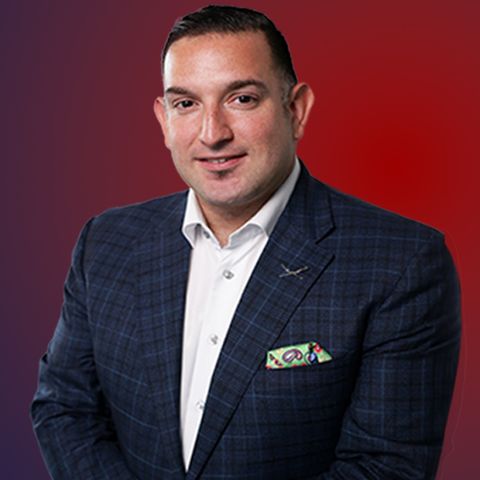
Scriptures & Wall Street is a bold, faith-driven podcast where real-world economics meet biblical truth. Hosted by Carlos Cortez Jr., the show cuts through Wall Street noise, government spin, and...
mostra di più
Scriptures & Wall Street is a bold, faith-driven podcast where real-world economics meet biblical truth. Hosted by Carlos Cortez Jr., the show cuts through Wall Street noise, government spin, and social media hype to expose what’s really happening to your money, your retirement, and your freedom.Each episode breaks down market volatility, interest rates, banking risk, Social Security, inflation, crypto, AI-driven markets, and the growing “track–trace–control” financial system—while anchoring every conversation in Scripture, stewardship, and personal responsibility. Carlos challenges listeners
mostra meno
Episodi & Post
Episodi
Post
Trascritto
28 SET 2026 · What do $7 diesel, record-high markets, artificial intelligence, and Universal Basic Income have in common?
Carlos Cortez Jr. connects three subjects that might seem completely unrelated—America’s truckers, Wall Street, and UBI—and asks what they could mean for the future of financial independence and retirement.
The conversation begins with truckers. Carlos discusses reports circulating about a possible October 1 trucker shutdown, but importantly acknowledges that he has not seen evidence confirming claims that the entire trucking industry will shut down. His broader concern is the economic pressure created by high diesel prices and thin operating margins—and how much of everyday American life ultimately depends on trucks moving food, medicine, construction materials, packages, milk, meat, produce, and countless other goods. Truckers, wallstreet and Univer…
Meanwhile, Wall Street appears to be telling a very different story.
Carlos points to rising stock indexes alongside elevated Treasury yields, volatile oil prices, geopolitical uncertainty, and persistent interest-rate pressure. For younger investors, he argues volatility can provide opportunities to continue accumulating assets. But for someone who is 65 or 70 and withdrawing money, that same volatility can become a retirement-income problem. Truckers, wallstreet and Univer…
That leads to one of the biggest questions of the episode:
You've spent decades climbing the mountain and building wealth—but how do you safely get back down?
Carlos says many successful retirees know how to work, save, contribute to a 401(k), and accumulate wealth, yet haven't developed a strategy for converting those assets into reliable retirement income. His focus shifts from simply growing a portfolio to preservation, income, and financial independence. Truckers, wallstreet and Univer…
Then comes the third piece: Universal Basic Income.
Carlos discusses AI and automation potentially transforming employment and references Andrew Yang's former UBI proposal of $1,000 per month for American adults. Carlos is strongly critical of UBI and argues it could create financial dependence; that is his viewpoint, not an established outcome. The broader question he raises is worth separating from the prediction: What happens to personal financial independence if more people become dependent on guaranteed payments for their basic standard of living? Truckers, wallstreet and Univer…
But underneath the truckers, markets, AI, and UBI discussion is another theme running through the entire episode:
Patience.
Carlos opens by reflecting on family, his children's hockey, lessons from his own experience as a college athlete, and the confidence parents give their children. He then connects patience with faith and investing, arguing that today's culture encourages people to rush everything—from relationships and business decisions to financial decisions and retirement planning. Truckers, wallstreet and Univer…
Instead, he makes the case for saving, stewardship, preparation, and time.
Using Proverbs and the example of the ant preparing before winter, Carlos argues that financial preparation should happen before the crisis arrives—not after. Truckers, wallstreet and Univer…
That philosophy leads directly into his Red Money, Yellow Money, and Green Money framework. Red Money represents market-exposed assets with growth potential and downside risk. Yellow Money represents professionally managed market strategies. Green Money, as Carlos presents it, uses insurance-based contractual guarantees designed around preservation, accumulation, and future income. Truckers, wallstreet and Univer…
Whether you're 15, 45, 65, or already retired, Carlos's message is ultimately about preparing while you still have the opportunity:
Don't rush. Don't depend on predictions. Build a plan designed to give you choices. Discover other shows on the Talk Red Podcast Network, and get your daily fix of news, sports, and entertainment at https://TalkRed.com.
Trascritto
25 SET 2026 · The retirement game is changing.
For decades, Americans followed a familiar formula: work, contribute to a 401(k), build Social Security benefits, pay off the house, and hope you've accumulated enough to comfortably retire.
Carlos Cortez Jr. argues that relying on that formula alone may no longer be enough.
On this episode of Scriptures & Wall Street, Carlos challenges both younger generations and current retirees to think seriously about financial independence, ownership, and who ultimately controls their retirement. His message is simple:
Build your retirement intentionally now—or risk having your options determined for you later.
The conversation begins with today's economic pressures. Carlos discusses elevated oil prices, inflation, the Federal Reserve, higher interest rates, agriculture, and rising costs—and why those pressures can eventually reach everything from transportation and food to household budgets and retirement portfolios.
He then turns to precious metals and IRAs, explaining why investors need to understand the difference between collectible coins and bullion, account value versus melt value, premiums, liquidity, and the risks of building an entire retirement around a prediction that gold or silver will eventually save the day.
But this episode goes beyond today's markets.
Carlos discusses concerns about the future of Social Security, universal basic income, AI and automation changing the workforce, digital financial systems, and increasing dependence on technology. Some of the broader control scenarios he describes are presented as his opinions and predictions rather than established outcomes. His takeaway is to focus on what individuals can control today: saving, building assets, creating income, understanding risk, and preparing earlier.
That's where the Color of Money comes back into the conversation.
Rather than speculating with an entire retirement portfolio, Carlos discusses Green Money as the principal-protection component of his framework and contrasts it with Red Money's exposure to market gains and losses. He particularly encourages younger investors to recognize the enormous advantage they have:
Time.
Whether you're 25, 45, or already approaching retirement, the message is the same.
Don't wait for Washington.
Don't depend on the next market prediction.
Don't assume one investment will solve everything.
Take responsibility for building the retirement you want while you still have time to build it. Discover other shows on the Talk Red Podcast Network, and get your daily fix of news, sports, and entertainment at https://TalkRed.com.
Trascritto
20 SET 2026 · Interest rates are rising.
Oil is still above $100 a barrel. Mortgage and borrowing costs are climbing. Inflationary pressure remains. Yet instead of selling off, the stock market keeps moving higher.
So what's going on?
On this episode of Scriptures & Wall Street, Carlos Cortez Jr. breaks down why Wall Street can continue rallying even in a higher-rate environment—and why investors may be asking the wrong question.
The market isn't necessarily celebrating higher interest rates. Carlos argues that, for now, investors are reacting to signs that corporate America, consumers, earnings, and credit markets have been able to withstand the pressure. But resilience today doesn't guarantee resilience tomorrow.
With crude oil remaining elevated, transportation and manufacturing costs rising, refinancing becoming more expensive, and inflation potentially keeping rates higher for longer, the real question isn't simply:
“Will the Fed raise rates again?”
It's:
“How long can the economy afford these rates?”
For retirees, that question becomes even more important.
Carlos explains why a retirement plan shouldn't depend entirely on cheap oil, falling interest rates, rising stocks, or bonds always providing protection. He compares retirement planning to the wise man in Matthew 7 who built his house on rock—the strength of the plan isn't proven when conditions are perfect; it's proven when the storm arrives.
That's where Red Money and Green Money enter the conversation.
Carlos explains why some retirement assets can remain exposed to growth while another portion can be positioned around contractual principal protection. He also takes a deeper look at an insurance-based Green Money strategy he presents as a potential bond alternative, including its liquidity restrictions, early-withdrawal considerations, insurer backing, and illustrated—not guaranteed—growth.
And this episode isn't only for people already approaching retirement.
Carlos directly challenges younger investors to start earlier, arguing that time may be one of the most powerful assets they have. Rather than waiting until their 40s or 50s to think seriously about financial independence, he encourages younger generations to begin building retirement assets while they're still building their careers.
Because the question isn't whether Wall Street can survive higher rates today.
It's whether your retirement is prepared if it can't tomorrow. Discover other shows on the Talk Red Podcast Network, and get your daily fix of news, sports, and entertainment at https://TalkRed.com.
Trascritto
18 SET 2026 · The pain at the pump may only be the beginning.
With crude oil prices elevated and reports of products like motor oil being rationed, Carlos Cortez Jr. warns that the consequences can spread far beyond gasoline. Diesel powers trucks. Trucks move groceries. Agriculture depends on fuel. Manufacturing, shipping, transportation, and everyday consumer goods all feel the pressure when energy costs rise.
And that creates a much bigger problem:
Inflation.
On this episode of Scriptures & Wall Street, Carlos examines how disruption surrounding the Strait of Hormuz, rising oil and diesel costs, expensive food, and geopolitical uncertainty could put renewed pressure on inflation—and potentially change the Federal Reserve’s interest-rate path.
For retirees, that matters.
Higher rates don't only affect Wall Street traders. They can influence mortgages, credit cards, auto loans, business financing, stocks, bonds, real estate, and ultimately the retirement income people spent decades building. Carlos argues that investors shouldn't construct a retirement around predictions that rates will fall or markets will continue rising.
Instead, he returns to the Three Colors of Money.
Red Money provides growth potential and liquidity but remains exposed to market losses. Yellow Money represents professionally managed “smart money” designed to actively respond to changing conditions. Green Money represents the protected portion of the strategy, using insurance-based contracts intended to provide principal protection and retirement income.
Carlos connects that philosophy to the story of Joseph in Genesis 41. Joseph didn't know every detail of what the future would bring. He simply understood that abundance wouldn't last forever—and prepared before the famine arrived.
That's the bigger lesson of this episode.
You can't control oil prices.
You can't control inflation.
You can't control the Federal Reserve.
But you can control how prepared your retirement is for whatever happens next.
Your retirement should depend on a plan—not tomorrow's headline. Discover other shows on the Talk Red Podcast Network, and get your daily fix of news, sports, and entertainment at https://TalkRed.com.
Trascritto
13 SET 2026 · Oil is surging. Silver is falling again. Bitcoin remains volatile. Inflation pressure isn't going away. And your 401(k) is sitting in the middle of all of it.
So what are you supposed to do?
For many investors approaching retirement, that's becoming an increasingly difficult question. Should you buy silver? Hold Bitcoin? Stay in the S&P 500? Move to cash? Buy real estate? Protect your principal?
On this episode of Scriptures & Wall Street, Carlos Cortez Jr. cuts through the noise and explains why the biggest retirement mistake may be trying to make every dollar accomplish the same goal.
Carlos examines the latest moves in crude oil, silver, Bitcoin, the U.S. dollar, volatility, and the stock market, showing how quickly supposedly “safe” investments can change direction. With oil pushing higher and inflation remaining a concern, the financial pressure isn't limited to Wall Street—it eventually reaches gasoline, diesel, transportation, food, plastics, utilities, borrowing costs, and household budgets.
Silver provides another warning.
After dramatic rallies and declines, Carlos explains why precious metals are still Red Money. They can create significant gains, but they're volatile, don't provide contractual principal protection, and can become dangerous when investors allow emotion to replace strategy.
The conversation then turns to the question many listeners are asking:
What should I do with my 401(k) or retirement savings when I want growth, liquidity, and protection at the same time?
Carlos breaks down Red Money, Yellow Money, and Green Money and takes a deeper look at an index strategy designed to rotate among different market environments—including equities, technology, Treasuries, and commodities. The objective is not to predict every market move, but to create a retirement structure where different dollars perform different jobs.
Because whether oil rises, silver falls, Bitcoin rallies, or Wall Street corrects, your retirement shouldn't depend on guessing tomorrow's headline correctly.
You need a plan—not another prediction. Discover other shows on the Talk Red Podcast Network, and get your daily fix of news, sports, and entertainment at https://TalkRed.com.
Trascritto
11 SET 2026 · One unexpected hit can change everything.
Carlos Cortez Jr. experienced that firsthand when his son suffered a fractured hip during a hockey game. He'll recover—but the injury raised a bigger question that applies directly to retirement:
What happens when your financial plan takes an unexpected hit?
As the conflict with Iran escalates, oil prices push higher, inflation remains a concern, Treasury yields stay elevated, and Wall Street wrestles with geopolitical uncertainty, retirees may be facing a financial environment where traditional diversification doesn't provide the protection they expect.
On this episode of Scriptures & Wall Street, Carlos breaks down how geopolitical conflict can ripple through the economy—from crude oil and transportation costs to inflation, Federal Reserve policy, bonds, stocks, and ultimately your retirement income.
The problem is that many investors have been conditioned to expect the same cycle: stocks fall, the Federal Reserve cuts rates, bonds rally, money becomes cheaper, and markets recover.
But what happens when the event hurting stocks is also inflationary?
Higher oil can contribute to inflation. Persistent inflation can complicate rate cuts. Higher rates can pressure bond prices and stock valuations simultaneously. Suddenly, the traditional 60/40 portfolio and a prayer may not feel nearly as diversified as expected.
That's why Carlos returns to the Color of Money framework.
Red Money provides market exposure and growth potential—but carries downside risk. Yellow Money remains liquid and market-based while emphasizing tactical management and risk control. Green Money is designed as the protected portion of the strategy, using insurance contracts to provide principal protection subject to the contract and insurer's claims-paying ability.
The goal isn't to predict what Iran, Washington, the Federal Reserve, or Wall Street will do tomorrow.
It's to build a retirement capable of surviving when you're wrong.
Because you don't diversify because you know what's coming.
You diversify because you don't. Discover other shows on the Talk Red Podcast Network, and get your daily fix of news, sports, and entertainment at https://TalkRed.com.
Trascritto
6 SET 2026 · A 30% return sounds great.
But how much risk did you have to take to get it?
Most investors have been trained to focus almost entirely on performance. They watch the S&P 500, Nasdaq, stocks, crypto, precious metals, mutual funds, and their 401(k) balances—but rarely ask one of the most important questions in retirement planning:
How much risk is actually inside my portfolio?
On this episode of Scriptures & Wall Street, Carlos Cortez Jr. breaks down the difference between Red Money and Yellow Money and explains why understanding that distinction becomes increasingly important as you approach retirement.
Red Money represents assets exposed to market fluctuations—stocks, bonds, ETFs, mutual funds, crypto, precious metals, real estate, and other investments capable of significant gains but also meaningful losses.
Yellow Money is different.
Carlos describes it as “smart money”: liquid, professionally managed money that remains invested in the markets but uses tactical management, risk controls, human portfolio managers, algorithms, and market indicators to respond when conditions change.
Instead of blindly riding the market over the cliff, the goal is to recognize risk, reduce exposure when necessary, preserve capital, and look for opportunities to reenter as conditions improve.
Carlos also explains standard deviation, one of the most overlooked measurements in investing, and why two portfolios producing similar returns may actually expose investors to dramatically different levels of risk.
With more than $40 trillion in U.S. debt, concerns surrounding commercial real estate and private credit, rapidly advancing AI, and continued market uncertainty, simply saying “stay invested” may not be enough of a retirement strategy.
Because retirement isn't only about how much you make.
It's about understanding how much risk you're taking to make it. Discover other shows on the Talk Red Podcast Network, and get your daily fix of news, sports, and entertainment at https://TalkRed.com.
Trascritto
30 AGO 2026 · Gold isn't just an investment anymore.
It's becoming part of the geopolitical battlefield.
As the United States expands economic pressure connected to Iran, Carlos Cortez Jr. examines why restrictions involving gold, digital assets, shipping, aviation, and technology should get the attention of investors—especially those approaching retirement.
Because if gold is supposedly an outdated relic, why does access to it still matter when nations engage in economic warfare?
On this episode of Scriptures & Wall Street, Carlos explores the connection between geopolitical conflict, gold, central-bank reserves, the U.S. dollar, precious metals, and America's growing $40 trillion debt burden. He discusses why nations may want assets held within their own financial systems and why access, ownership, and counterparty risk deserve a place in the retirement conversation.
Carlos also looks at the unusual market environment surrounding gold, silver, the dollar, S&P 500, and Nasdaq—and why strong markets don't eliminate the need to prepare for volatility.
For retirees, the lesson is bigger than whether gold or silver goes up tomorrow.
Precious metals can serve a purpose, but Carlos argues they shouldn't be expected to provide everything a retirement portfolio needs. Gold and silver don't inherently produce retirement income, markets can move violently, and chasing returns without understanding downside risk can leave retirees vulnerable.
That's why the conversation returns to Red Money, Yellow Money, and Green Money, principal protection, taking profits, diversification, and knowing exactly what job each portion of your wealth is supposed to perform.
The goal isn't to predict every geopolitical event.
It's to build a retirement that doesn't require you to.
Because sometimes the return OF your money matters more than the return ON your money. Discover other shows on the Talk Red Podcast Network, and get your daily fix of news, sports, and entertainment at https://TalkRed.com.
Trascritto
28 AGO 2026 · Silver crashed from its highs.
Bitcoin surged. The stock market pushed toward record territory. America crossed $40 trillion in national debt. And now silver is beginning to show signs of life again.
So after warning investors about silver earlier this year, why is Carlos Cortez Jr. looking at it again?
On this episode of Scriptures & Wall Street, Carlos breaks down one of the most overlooked indicators in precious metals investing: the gold-to-silver ratio. Instead of simply asking whether silver is going up or down, Carlos explains how comparing silver's value to gold can help investors recognize when the metal may be historically expensive—or potentially undervalued.
The conversation explores silver's dramatic decline from its previous highs, the weakening U.S. dollar, gold prices, technical momentum, and why Carlos believes silver may be entering a more attractive reentry zone.
But this isn't a “put everything into silver” message.
Carlos explains why silver, gold, Bitcoin, stocks, real estate, and other market-driven assets are still Red Money. They can create tremendous growth, but they also carry downside risk. The bigger lesson is understanding what job each part of your money needs to perform.
With $40 trillion in U.S. national debt, persistent inflation, changing interest rates, AI disruption, and continued market uncertainty, diversification may matter more than ever.
Because silver can be a hedge.
It can be an opportunity.
But it shouldn't have to carry your entire retirement. Discover other shows on the Talk Red Podcast Network, and get your daily fix of news, sports, and entertainment at https://TalkRed.com.
Trascritto
25 AGO 2026 · Everybody feels like a genius when everything is going up.
The S&P 500 is hitting new highs. Bitcoin has surged through major resistance. Investors are posting gains, celebrating their portfolios, and once again believing the good times may keep rolling.
But underneath the market euphoria, America has crossed $40 trillion in national debt, interest-rate uncertainty remains, the yield curve continues raising questions, and retirees are still exposed to risks that don't disappear simply because their account balance is growing.
On this episode of Scriptures & Wall Street, Carlos Cortez Jr. breaks down the surge in Bitcoin, the S&P 500's record-setting run, silver's latest move, the U.S. dollar, and the emotional trap that catches investors during powerful bull markets:
Greed.
Carlos explains why making money isn't the same as having a retirement plan, why taking profits can be an act of discipline rather than fear, and why investors should understand the difference between Red Money, Yellow Money, and Green Money before volatility returns.
The conversation moves beyond charts when Carlos shares the story of a terminally ill man preparing financially for his wife after he's gone. It's a powerful reminder that retirement planning isn't ultimately about beating Bitcoin, predicting silver, or squeezing another percentage point out of the S&P 500.
It's about knowing what your money is supposed to accomplish.
Growth matters.
Protection matters.
But stewardship means having a plan for the people who depend on you—even when you're no longer here to provide for them yourself. Discover other shows on the Talk Red Podcast Network, and get your daily fix of news, sports, and entertainment at https://TalkRed.com.
Scriptures & Wall Street is a bold, faith-driven podcast where real-world economics meet biblical truth. Hosted by Carlos Cortez Jr., the show cuts through Wall Street noise, government spin, and...
mostra di più
Scriptures & Wall Street is a bold, faith-driven podcast where real-world economics meet biblical truth. Hosted by Carlos Cortez Jr., the show cuts through Wall Street noise, government spin, and social media hype to expose what’s really happening to your money, your retirement, and your freedom.Each episode breaks down market volatility, interest rates, banking risk, Social Security, inflation, crypto, AI-driven markets, and the growing “track–trace–control” financial system—while anchoring every conversation in Scripture, stewardship, and personal responsibility. Carlos challenges listeners
mostra meno
Informazioni
| Autore | Talk Red |
| Organizzazione | Drew Berquist |
| Categorie | News - Affari , Investimenti , Politica |
| Sito | www.spreaker.com |
| producer@redbeachmedia.com |

Copyright 2026 - Spreaker Inc. an iHeartMedia Company
