Contatti
Info
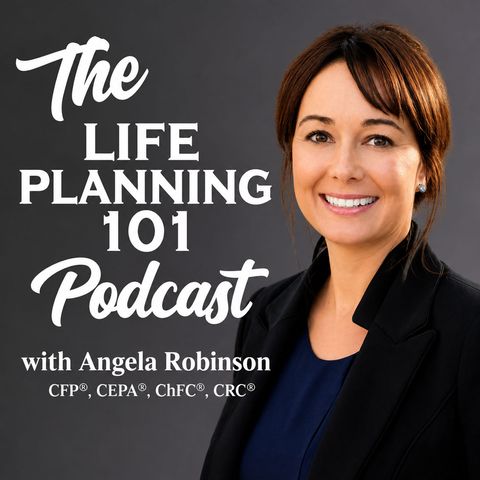
Life Planning 101 from Kennedy Financial Services helps you navigate the financial and life decisions that matter most. Each episode brings practical insights and real-world conversations about financial planning, retirement,...
mostra di più
Life Planning 101 from Kennedy Financial Services helps you navigate the financial and life decisions that matter most. Each episode brings practical insights and real-world conversations about financial planning, retirement, investments, life insurance, Social Security, estate planning, and living life with purpose.
We believe financial planning isn’t just about numbers—it’s about creating a plan that supports the life you want to live. Whether you’re preparing for retirement, protecting your family, managing your finances, or simply looking for practical ways to make the most of every stage of life, Life Planning 101 gives you information, ideas, and conversations to help you plan with confidence.
Subscribe and join us as we explore the financial and life-planning topics that can help you make informed decisions today and prepare for tomorrow.
mostra meno
We believe financial planning isn’t just about numbers—it’s about creating a plan that supports the life you want to live. Whether you’re preparing for retirement, protecting your family, managing your finances, or simply looking for practical ways to make the most of every stage of life, Life Planning 101 gives you information, ideas, and conversations to help you plan with confidence.
Subscribe and join us as we explore the financial and life-planning topics that can help you make informed decisions today and prepare for tomorrow.
Episodi & Post
Episodi
Post
12 NOV 2026 · This week, Bret talks about long-term care planning beyond just the financial aspect, emphasizing the emotional, physical, and family impacts of care needs. Key Takeaways 💡
- Long-Term Care Is Emotional: A long-term care event can be one of the most painful times in a person's life and their family's. Bret shares that clients who had plans and conversations in place experienced relief and peace when a health crisis hit, knowing their spouse wouldn't have to bear the burden financially or physically.
- Stress and Physical Toll on Caregivers: Long-term care needs create significant stress on spouses and children, which negatively affects health. Key questions to ask: who will be the caregiver, are they able (location, physical capacity, other obligations), and will caregiving cause them to become ill?
- Family Strife and the Spare Tire Analogy: Without planning, assumptions about who will provide care (e.g., a daughter-in-law) can cause family conflict. Bret compares planning to carrying a spare tire: a flat is still a burden, but having the spare makes it manageable. Planning ahead means you're prepared even if the event never happens.
- Life-Changing and Expensive: A long-term care need changes the lives of everyone involved, including careers—family members may have to step away from work. Costs run $60,000 per year or more depending on location, raising questions of where the money will come from and where the person will live.
- Location and Medicaid Look-Back Risks: Care costs vary by location (e.g., Dallas-Fort Worth vs. Abilene), so location should be discussed in advance. Without planning, Medicaid's five-to-seven year look-back period can force spend-down of assets—including property or income sources tied to children's livelihoods—jeopardizing intended legacies.
- It Won't Happen to Me: An estimated 7 out of 10 people turning 65 today will need some type of long-term care. People are living longer, but not necessarily with a better lifestyle. Bret shares humorous but telling stories of men who dismiss planning, saying they'll 'take care of it' themselves, and urges listeners to question whether that's really a plan.
- Have the Conversation Ahead of Time: Long-term care isn't a dinner-table topic, but families should hold legacy-planning conversations to align expectations. Talking to a financial professional and loved ones ahead of time ensures the 'spare tire' is in place when a life-changing event occurs.
4 NOV 2026 · This week Angela explores 'the time value of success issues'—how unaddressed financial, tax, insurance, and legal problems compound over time as wealth grows. She explains why fragmented specialist advice creates gaps and overlaps, and walks through her firm's three-step holistic planning process. Key Takeaways 💡
- The Specialist Coordination Problem: As people build wealth, they consult separate specialists—insurance agents, bankers, accountants, investment advisors, and attorneys—often multiple of each. Angela asks two critical questions: do any of these professionals know what the others are doing, and if not, who is managing the overall picture to prevent gaps and overlaps? Usually the answer is no one.
- Success Issues Compound Over Time: 'Success issues' pile up gradually—one day at a time—until people feel overwhelmed and wonder if they'll be okay. Many adopt the 'Scarlett O'Hara syndrome' of putting things off until tomorrow, but the compounding can eventually threaten everything they've built, potentially wiping it out or diminishing it significantly.
- Time Value of Money Example: Saving $1,000/month at 8% starting at age 20 yields roughly $5.3 million by age 65. Waiting until 30 requires saving $2,300/month to reach the same result—an extra $425,000 out of pocket. The lesson: the greatest gift you can give your money is time.
- When People Actually Seek Help: Most clients come to the firm around retirement age, not their 20s or 30s. Typical patterns: some arrive in their 40s motivated by painful family experiences, many at 50-55 after emptying their nest egg on kids, slight panic at 60-65, and those over 65 searching for a 'magic bullet' that usually doesn't exist.
- Success Breeds Complexity: Success compounds like cash but also gives birth to complexity—'success has a last name and it's issues.' Clients joke it would be easier to be broke. People typically address only the most painful issue (often taxes when younger) and shove the rest 'under the covers,' handling problems à la carte until everything compounds into a crisis.
- Lost in the Forest Without a Map: Overwhelmed clients realize they're in the middle of a forest with no 'you are here' map—that's when life planners get called in. Getting out may take as long as it took to get there, but ignoring the problem due to fear or time constraints only makes things fall apart further.
- Step 1: Begin With the End in Mind: Borrowing from Stephen Covey, the first step is understanding what a purpose-driven life looks like for the client—without knowing the destination, you can't plan. Example: a couple asked about an S-corp recommendation, and Angela discovered their business was already for sale—information their accountant didn't have, showing why holistic questions matter.
- Step 2: Paint the Full Current Picture: The firm gathers the complete picture: current situation, future events (which differ from goals—e.g., paying for a wedding you don't want), family dynamics and 'elephants in the room,' and feelings about money and risk. Hidden information has previously forced the firm to backtrack three years of work, so full disclosure is critical.
- Step 3: Navigate and Implement: With the full picture, the firm uncovers dangers, gaps, and overlaps, coordinates with the client's other professionals, and explores strengths and opportunities. Clients then choose which direction to 'steer the ship,' and the firm handles the heavy lifting of implementation.
- Intentionality vs. Compounding Problems: Money isn't everything, but it's 'oxygen' for living life on purpose. Angela's closing question: are you building a life that compounds the time value of success and intentionality, or one that compounds the time value of success issues? The discrepancy between the two outcomes is mind-boggling.
28 OTT 2026 · This week Angela discusses the role of self-discipline in retirement saving, offering a practical strategy to overcome common financial habits. She shares anecdotes and a final story to illustrate the importance of small, consistent actions. The episode emphasizes that lack of discipline, not knowledge, is often the main barrier to successful retirement planning. Key Takeaways
- Lack of Discipline Hinders Retirement: Most Americans know they should save for retirement and have access to financial guidance, yet many fail to achieve their retirement goals. The primary reason is a lack of self-discipline, not a lack of wisdom or advice. This is evident in common behaviors like quitting gym memberships after January or spending money as soon as it hits a checking account.
- Forced Discipline Strategy: To overcome poor saving habits, Angela suggests forcing discipline by not letting your entire paycheck hit your checking account. Instead, only deposit the amount you need for living expenses and discretionary spending, and automatically divert the rest to a separate savings or investment account. This prevents impulsive spending and builds savings without relying on willpower.
- Start Small and Restructure: Change doesn't require drastic measures; start by saving small amounts consistently, like a cost-of-living increase. Restructure your finances so that only necessary funds are accessible, and consider making withdrawals difficult (e.g., requiring a phone call) to discourage spending. This approach makes saving manageable and sustainable over time.
- The Ant and the Cookie Analogy: Angela shares a story of two ants: one takes small pieces of a cookie home, eventually moving the entire cookie, while the other tries to move the whole cookie at once and fails. The lesson is that small, consistent efforts lead to success, whereas trying to do too much at once often results in nothing. Apply this to retirement saving by taking small, regular steps.
21 OTT 2026 · This week Angela discusses the importance of living life on purpose by reflecting on one's own story and obituary. She shares a humorous obituary, encourages listeners to imagine their ideal life story, and offers tools like a life scorecard and writing your own obituary to align daily actions with that vision. Key Takeaways
- Reflecting on Life's Brevity: Angela reads a humorous obituary of Pat Stocks, who lived to 94, to illustrate that life passes quickly regardless of age. She emphasizes that people often look in the mirror and realize time has flown, with kids grown and grandkids older, prompting the need to reflect on one's own life story.
- Defining Your Ideal Story: Angela challenges listeners to imagine themselves in their favorite spot in the world during their last days and consider what they want their life story to be. She stresses the importance of writing this down and then asking whether you are living that story today, suggesting a scale of 1 to 10 to evaluate alignment.
- Using the Life Scorecard Tool: Angela introduces a free 'life scorecard' tool on the Kennedy Financial website that helps break down different areas of life and score them. This tool aids in identifying areas for improvement and making concrete notes to work toward living life on purpose, rather than just staying busy.
- Writing Your Own Obituary: Angela shares her personal experience of writing her own obituary in a study group, which was eye-opening and revealed areas she wasn't prioritizing. She encourages listeners to do the same exercise to gain clarity on how they need to live to achieve their desired story.
- The Dash Poem Reflection: Angela concludes with the poem 'The Dash' by Linda Ellis, which emphasizes that what matters most is how we spend the dash between our birth and death dates. She urges listeners to slow down, show appreciation, and live with purpose so that their eulogy reflects a life well-lived.
19 OTT 2026 · In this episode, Aaron, Sam, and Kade discuss recent market volatility driven by AI-related debt concerns, particularly the financial troubles of CoreWeave, and the broader implications for the tech sector. They also touch on Tesla's flying car demonstration and emphasize the importance of long-term, disciplined investing.
12 OTT 2026 · In this episode, Aaron, Sam, Tanner, and Kade discuss current stock market conditions, earnings reports, and the impact of AI on market concentration. They analyze market predictions, bond investment strategies, and the potential for future interest rate changes.
8 OTT 2026 · Angela discusses the serious issue of elder abuse, sharing a real client story and practical steps to protect aging parents. She highlights the prevalence of abuse, common tactics used by perpetrators, and actionable measures for prevention. Key Takeaways 💡
- Elder Abuse Prevalence: An estimated five million elderly people are abused each year, but only one in 14 cases is reported. Two-thirds of elder abuse is committed by a family member or trusted individual, making it a hidden and often unreported crime.
- Common Abuse Tactics: Abusers often use powers of attorney, joint bank accounts, credit cards, and overbilling to exploit the elderly. They may also use threats or manipulate legal documents, as seen in the story of a client whose power of attorney transferred over a million dollars to a relative.
- Building Awareness: To protect parents, it's crucial to know their financial accounts, credit cards, and legal documents, and to stay updated on who is named in them. Talk to their trusted advisors, workers, and caregivers, and keep your antennas up for any red flags.
- Preventive Measures: Practical steps include monitoring credit, considering a credit freeze, setting up text alerts for spending, using call-blocking apps, and becoming a duplicate receiver of financial statements. Ensure you are listed as a trusted contact at financial institutions.
- Meet Financial Advisors: Take time to meet your parents' financial advisors and institutions, so they know you and can alert you to suspicious activity. Advisors are often wary of new family members appearing, as abuse frequently comes from relatives, so building a relationship is key.
- Be Present: Being present and involved in your parents' lives makes them less vulnerable to abuse. Abusers target those who seem isolated, so regular visits and involvement can deter potential exploitation.
1 OTT 2026 · This week, Angela discusses estate planning during Estate Planning Awareness Month, focusing on the differences between will-based and trust-based plans. She emphasizes the importance of having a comprehensive estate plan to avoid complications for heirs and highlights the potential pitfalls of relying solely on a will. Key Takeaways
- Will Limitations: A will only covers assets not already designated by beneficiary or titling, acting like a vacuum cleaner that picks up leftover pieces. Contract property, such as IRAs with named beneficiaries or bank accounts with payable-on-death designations, supersedes the will, potentially leading to unintended disinheritance. Executors must itemize, value, and probate all remaining assets, which can be time-consuming and costly.
- Asset Inventory Exercise: To assess estate complexity, listeners are encouraged to list all assets, including cash, personal possessions, bank accounts, investments, online accounts, and business interests, with values. They should then verify how each asset is titled and what happens upon death, as assumptions often lead to surprises. This exercise mirrors the homework an executor would face, revealing that even modest estates can be complicated.
- Probate Challenges: Probate involves retitling assets twice: first to the estate and then to beneficiaries, and can be costly, especially in states like Wyoming with hefty fees. Even in Texas, a 'friendly' state, finding and valuing assets can take years, as illustrated by a family still uncovering assets 12 years later. Properly set up contract property can avoid probate, but it may not always align with wishes, such as when a beneficiary dies.
- Trust-Based Plan Benefits: A living trust, when properly funded, acts as the primary estate plan, with a pour-over will catching any missed assets. Titling assets to the trust avoids probate, consolidating everything into one 'toy box' for trustees and executors. This simplifies administration and can be less expensive overall than a will-based plan, despite upfront costs.
- Trust Misconceptions: Trusts are often misused, and a trust does not provide tax benefits, asset protection, or privacy changes. The key is to properly retitle assets into the trust; otherwise, it offers no advantage. A good trust document makes funding seamless, but a poorly drafted one can create complications.
23 SET 2026 · This week, Angela discusses strategies for grandparents to save for their grandchildren, emphasizing the power of compound interest and the importance of starting early. She explores various investment vehicles and encourages listeners to think beyond traditional accounts to impart values like giving back and learning. The episode includes humorous quotes from children about money and practical advice on choosing flexible, meaningful savings options. Key Takeaways 💡
- Power of Compound Interest: Compound interest is described as the most powerful force in investing, allowing money to grow exponentially over time. An example is given: if grandparents saved $10 a month for 18 years (total $2,160) and it grew at 8% annually until retirement, it would be worth over $200,000. Starting early is crucial because time amplifies the effects of compounding.
- Rule of 72: The Rule of 72 is a simple way to estimate how long an investment takes to double: divide 72 by the expected annual return. For instance, with a 10% return, an investment doubles in about 7.2 years, so $10,000 becomes $20,000 in 7.2 years and $40,000 in 14.4 years. This illustrates the benefit of starting early and letting time work for you.
- Define Your Goal First: Before choosing a savings vehicle, clarify what you want to help your grandchildren achieve: higher education, retirement windfall, family support, first home purchase, or life insurance. Also consider imparting values like giving back, loving learning, or a sense of pride in saving. This goal-setting prevents analysis paralysis and guides the choice of investment.
- Avoid Inflation Risk: Savings bonds and CDs may not keep up with inflation, eroding the real value of savings over time. For example, $100 in 1952 would cost $1,035.13 today, highlighting the need for investments that outpace inflation. With a long time horizon, taking more risk is appropriate to grow wealth effectively.
- Flexibility and Starting: If unsure about the best vehicle, prioritize flexibility over permanence. Options include custodial accounts, 529 plans, kiddie Roth IRAs, life insurance, or even non-traditional choices like cattle. The key is to start somewhere, even if it's not perfect, and build on it over time.
- Creative Giving Example: A client set up a mini family foundation to teach children about giving back. The kids learn to invest, manage a safe withdrawal rate, and nominate charities, gaining hands-on experience and quality time with their grandmother. This shows that saving for grandchildren can be more meaningful than just an account.
21 SET 2026 · This week, Aaron, Sam, and Kade discuss the Federal Reserve's recent interest rate hike, rising energy prices and their inflationary impact, and the market's reaction. They also cover the strategic petroleum reserve, AI regulation, and notable earnings reports from companies like AutoZone, Broadcom, Oracle, and Adobe.
Life Planning 101 from Kennedy Financial Services helps you navigate the financial and life decisions that matter most. Each episode brings practical insights and real-world conversations about financial planning, retirement,...
mostra di più
Life Planning 101 from Kennedy Financial Services helps you navigate the financial and life decisions that matter most. Each episode brings practical insights and real-world conversations about financial planning, retirement, investments, life insurance, Social Security, estate planning, and living life with purpose.
We believe financial planning isn’t just about numbers—it’s about creating a plan that supports the life you want to live. Whether you’re preparing for retirement, protecting your family, managing your finances, or simply looking for practical ways to make the most of every stage of life, Life Planning 101 gives you information, ideas, and conversations to help you plan with confidence.
Subscribe and join us as we explore the financial and life-planning topics that can help you make informed decisions today and prepare for tomorrow.
mostra meno
We believe financial planning isn’t just about numbers—it’s about creating a plan that supports the life you want to live. Whether you’re preparing for retirement, protecting your family, managing your finances, or simply looking for practical ways to make the most of every stage of life, Life Planning 101 gives you information, ideas, and conversations to help you plan with confidence.
Subscribe and join us as we explore the financial and life-planning topics that can help you make informed decisions today and prepare for tomorrow.
Informazioni
| Autore | Angela Robinson |
| Organizzazione | Angela Robinson |
| Categorie | Economia , Investimenti , Istruzione |
| Sito | www.kennedy-financial.com |
| lifeplanning@kennedy-financial.com |

Copyright 2026 - Spreaker Inc. an iHeartMedia Company
