Contatti
Info
A weekly podcast featuring the leading thinkers in business and management.
Episodi & Post
Episodi
Post
1 OTT 2026 · AI is making it faster and cheaper than ever to turn ideas into prototypes, products, and businesses—but that abundance creates new challenges for leaders. In episode 3 of a special four-part series on how AI is changing leadership, we look at the ways industry leaders are using AI to truly gain a competitive edge and innovate for the future. Cisco Chief Product Officer Jeetu Patel explains how AI is changing the pace and nature of innovation, why human judgment and taste become more important when everyone has access to the same tools, and how companies can use AI to tackle problems they couldn't have solved before. He also discusses the risks of AI agents, why organizations need new approaches to security and oversight, and how leaders can build a culture that embraces experimentation without sacrificing rigor or accountability.
29 SET 2026 · How do you know when to trust your previous experience in a transformation environment, and how do you know when to listen, observe, and adapt? Ron Johnson helped create the Apple Store and transform Target into a design-forward retailer. But when he brought his approach to JCPenney, his transformation failed. He explains why leaders shouldn't rely too heavily on data when they're trying to create something that hasn't been done before, how Steve Jobs used patience and diverse perspectives to drive innovation, and why great customer experiences depend on empowering employees to solve problems one customer at a time. Johnson also reflects on his experience at JCPenney, where he moved too quickly and underestimated how deeply employees and other stakeholders were invested in the company's existing way of doing business. He shares what he would do differently today—and why listening may be one of the most important skills a leader can develop. Johnson is the author of Shop Different: How Retail Revealed Apple's Genius.
24 SET 2026 · AI is rapidly changing how top leaders communicate with employees, customers, boards, and each other. In episode 2 of a special four-part series on how AI is changing leadership, we explore how executives can use AI to improve communication without outsourcing the thinking, judgment, and empathy that make it effective. Stanford professor Matt Abrahams and Zapier CEO Wade Foster discuss how leaders are using AI to synthesize information, structure ideas, prepare for difficult conversations, and rehearse for high-stakes moments. They also explain why leaders should be wary of letting AI write everything for them, how overreliance on AI can create a “comprehension gap,” and why preserving a distinctive human voice may become even more important as AI-generated communication becomes ubiquitous. Abrahams is the author of Think Faster, Talk Smarter and host of the podcast Think Fast, Talk Smart. Foster is the cofounder and CEO of Zapier, a software automation company.
22 SET 2026 · Becoming CEO can look like the culmination of a career. But the skills that help someone rise to the top job aren't necessarily the ones that make them successful once they get there. Nitin Nohria, former dean of Harvard Business School, has spent three decades studying CEOs and working with new leaders as they adjust to the demands of the role. He says one of the biggest surprises for new CEOs is realizing that they can't—and shouldn't—run the company themselves. Instead, their job is to create the conditions for their leadership team to run it well. He also explains how CEOs can stay connected to their organizations, build the right leadership team, manage their boards, focus their time, and decide which emerging issues—including AI—actually deserve their attention. Nohria is author of The CEO: The Role, the Reality, the Responsibility.
17 SET 2026 · The decisions leaders must make about AI today go far beyond what platforms to invest in: AI is changing organizational culture and leadership for good. In episode 1 of a special four-part series on how AI is changing leadership, we look at how the technology is changing how people interact at work, the new culture it is creating, and how leaders can get smart about talent management and strategy in this rapidly advancing world. Paula Goldman, Salesforce’s chief ethical and humane use officer, argues there's currently a big opportunity to redesign work around the complementary strengths of humans and AI. She explains how AI could reshape entry-level jobs and the development of future leaders, why companies need to rethink internal mobility and talent development, and how executives can prepare their organizations for an AI-powered workforce without sacrificing accountability, creativity, or trust. Goldman is the author of Manage the Machine: How to Harness Human-AI Collaboration at Work. Plus: • Why “human in the loop” is an outdated model for managing AI—and what it means to put humans “at the helm.” • How leaders can determine which tasks to delegate to AI and where human judgment matters most • Why treating AI primarily as a cost-cutting tool could mean missing its bigger potential • How companies can redesign jobs and develop talent as AI takes over more routine tasks • Why leaders need to think differently about entry-level hiring and the development of future executives • How organizations can use AI to improve management, internal mobility, and employee development
15 SET 2026 · When the future feels increasingly out of our control, how can leaders and organizations make progress? University of Pennsylvania psychologist Martin Seligman, a pioneer in the study of optimism, resilience, and human flourishing, argues that the answer is agency: the belief that we can influence outcomes and create positive change. He defines agency as a combination of three capabilities: efficacy—the belief that you can achieve a goal now; optimism—the belief that you can achieve it in the future; and imagination—the ability to envision possibilities that don't yet exist. And he explains how leaders can cultivate these qualities in themselves and their organizations, how managers can help employees overcome catastrophizing, and what AI can—and can't—do when it comes to one of the most important human capabilities: imagination. Seligman is the author of Agency: The Psychological History of Human Progress.
8 SET 2026 · When a company is small, maintaining a strong culture can feel relatively easy. But as organizations grow, layers of management, geographic distance, and pressure for efficiency can make it much harder to preserve what made the company special in the first place. Restaurateur Danny Meyer has spent decades figuring out how to do just that. He founded Union Square Cafe and built Union Square Hospitality Group, then helped scale Shake Shack from a single location in New York City into a global restaurant chain. Along the way, he’s learned that culture isn’t what happens when the CEO is in the room—it’s what happens when they’re not. He explains how he turned his philosophy of “enlightened hospitality” into a set of specific behaviors that employees can understand and practice. He discusses why companies should hire for both technical expertise and emotional skills, how to identify people with a high “hospitality quotient,” and why promotions are one of the most powerful tools leaders have for reinforcing culture. Meyer is the author of What Could Possibly Go Right? The Essential Journey to Scale an Enduring Culture.
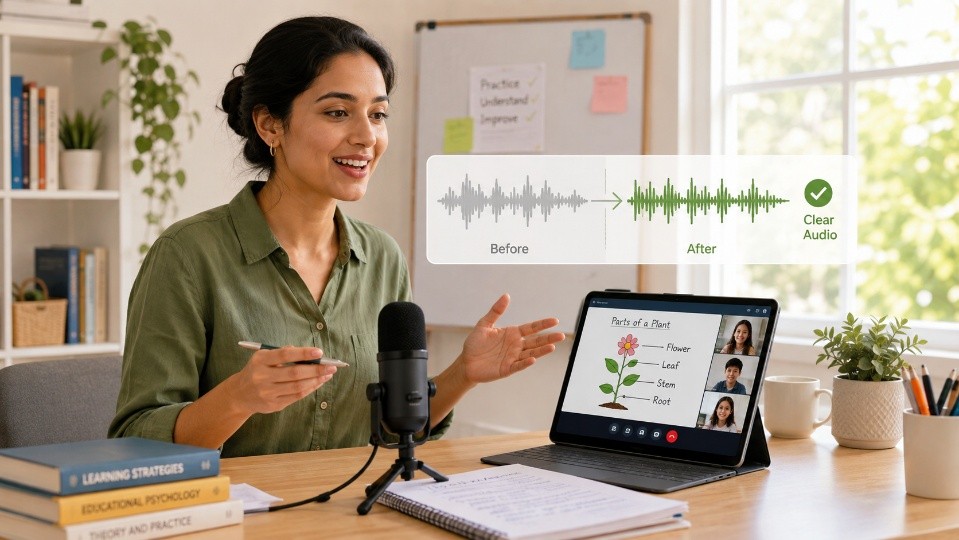
7 SET 2026 · You do not need a full studio to record a useful online lesson. But if students struggle to hear key explanations, even strong teaching can lose value fast. A lesson recorded at home, in an office, or in a classroom may pick up fan noise, traffic, room echo, or low electrical hum. Those sounds seem small when you are speaking, yet they become much more noticeable during playback. If the speech is still clear underneath, a tool that canhttps://www.cleanaudio.io/ can help make the lesson easier to follow without forcing you to record the entire session again.
Why Audio Clarity Matters So Much in Online Learning
In a live class, students can ask you to repeat a sentence. In a recorded lesson, the audio has to do more work on its own. If key words are masked by background noise, students may replay the same section several times or miss the point entirely. That creates friction, especially in lessons that explain technical steps, new vocabulary, or multi-part instructions.Clear audio also affects how professional a lesson feels. A simple slide deck with a steady, easy-to-hear voice often works better than a polished visual presentation paired with hollow or noisy narration. Students are willing to forgive an ordinary room or webcam angle. They are much less patient when they cannot comfortably understand the teacher.That is why audio quality is not a luxury in online learning. It is part of comprehension.
Common Sound Problems in Recorded Lessons
Most online instructors do not record in perfect conditions. They record wherever they can: a spare bedroom, a shared office, a classroom after hours, or a quiet corner at home. Each of those spaces tends to create a different problem.A ceiling fan, air conditioner, or laptop fan often produces a steady layer under speech. Traffic outside a window can rise and fall across a lesson. A bare room may create echo, making the voice sound farther away than it really is. Some microphones or cables add a light hum or static noise. If you record outdoors or near an open window, wind can become part of the problem too.The important question is not whether the recording sounds perfect. It is whether the student can still follow the words easily. If the explanation remains understandable, cleanup may help. If important words are missing because of clipping, a connection dropout, or a loud interruption, you may need an edit or a retake instead.
A Simple Pre-Publish Workflow for Teachers and Course Creators
Before publishing a lesson, it helps to follow a repeatable workflow. That keeps the process manageable and makes audio quality easier to evaluate from one lesson to the next.
- Record With Speech as the Main Priority
When recording, keep the microphone close enough that your voice stays stronger than the room. You do not need expensive equipment to do this well. A basic external microphone placed correctly is often more useful than a more advanced microphone used from too far away.Record a short test before starting the full lesson. Listen for background sounds you may have stopped noticing, such as air conditioning, a fan, or hallway noise. This quick check can prevent a twenty-minute explanation from becoming a repair project later.
- Clean the Recording Before Final Publishing
Once the lesson is recorded, listen to one normal section and one of the noisiest sections. If speech is still clear but distracted by background sound,https://www.cleanaudio.io/ such as CleanAudio can be a practical step before publishing.CleanAudio supports audio and video uploads and is designed to target problems such as wind, fan and AC noise, traffic, static or hum, and room echo or reverb. The idea is simple: upload the recording, let the AI process it, and compare the cleaned preview with the original before deciding what to keep.
- Review the Lesson Like a Student Would
After cleanup, do not judge the result only from a waveform or a quick glance at editing software. Play the lesson through ordinary headphones or laptop speakers and listen as a student would.Check whether instructions, examples, and key terms are easy to understand. Listen to quieter phrases and sentence endings, because those are often the first places where noise or overprocessing becomes obvious. If the cleaned version sounds clearer without becoming robotic, hollow, or unstable, it is likely moving in the right direction.
When AI Cleanup Helps Most in Educational Content
AI cleanup is especially useful when the lesson itself is good and the problem is mainly environmental. For example, an instructor may record a clear tutorial while a fan runs in the room. A trainer may capture a strong onboarding session, but the office adds low background noise. A teacher may record a science explanation in a reflective classroom that adds too much echo. In situations like these, ahttps://www.cleanaudio.io/ can help reduce distracting sound while keeping the original explanation intact.In those cases, the goal is not to create a studio illusion. It is to reduce the distractions that make students work harder than necessary. This is particularly helpful in tutorial videos, language lessons, software walkthroughs, webinar recordings, and internal training materials.Cleanup can also save time when re-recording would mean recreating screen demonstrations, annotations, or long explanations from scratch. If the speech is already there, improving listenability may be enough.
What AI Cleanup Cannot Fix for You
AI cannot repair missing words from loud bangs, severe clipping, or audio dropouts, nor can it perfectly separate overlapping speakers. In education, where clarity equals accuracy, it is safer to re-record or edit damaged sections rather than over-processing them.
Small Recording Habits That Reduce Editing Later
Reduce editing by choosing quiet spaces, moving closer to the mic, and turning off noisy appliances. Avoid empty rooms to minimize echo and always perform a quick test recording first. Consistency in these simple steps is more effective than any post-production tool.
2 SET 2026 · Pick Sound Formats Beyond A Basic Video to MP3 Converter
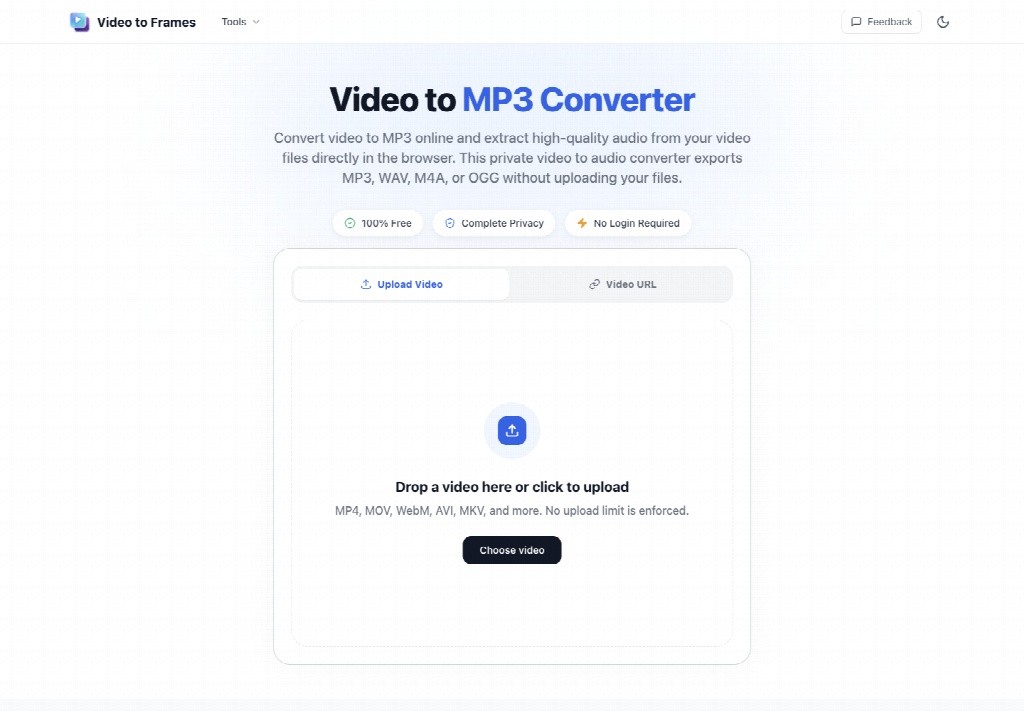
Audio syndication teams and podcast network managers regularly receive incoming master assets packaged inside heavy video containers, ranging from live studio camera streams to recorded panel discussions. When preparing these multi-format files for diverse streaming directories, production assistants instinctively search for a standard https://videotoframes.com/video-to-mp3 to strip out the audible speech. While MP3 remains an undisputed global standard for general compatibility, defaulting uncritically to a single compression codec often sacrifices acoustic fidelity, wastes host storage quotas, and ignores modern playback capabilities built into contemporary mobile operating systems.
Selecting an optimal sound format requires balancing contradictory engineering variables across diverse listening platforms. High-end podcast players increasingly leverage advanced AAC compression to deliver broadcast quality over cellular connections, while audio archive repositories mandate uncompressed PCM sound for future-proof preservation. Modern browser-based toolchains allow content creators to extract multiple target formats directly from incoming video files on the local desktop, enabling producers to tailor their audio exports precisely to the functional demands of each downstream distribution endpoint.
In high-throughput syndication desks where dozens of multi-speaker episodes are processed each week, automated ingestion pipelines must maintain strict quality control. Audio engineers frequently encounter mixed-codec deliveries containing variable audio sample rates, phase-shifted stereo feeds, and fluctuating dynamic ranges that require immediate corrective action before public syndication feeds update.
Defaulting To MP3 Compromises Modern Audio Syndication
The ubiquity of the MP3 codec frequently blinds audio editors to its underlying technical compromises. Conceived in the early era of digital media, MP3 relies on psychoacoustic masking curves that deliberately discard frequency content deemed inaudible to casual listeners. While this perceptual encoding performed miracles on dial-up internet connections and early digital music players, modern studio microphones and high-fidelity consumer earbuds expose harsh compression artifacts, phase smearing on high frequencies, and muffled sibilance that dull spoken clarity.
In our syndication desk experience, blindly converting speech recordings to low-bitrate MP3s introduces measurable friction during multi-platform distribution. When an engineering assistant once ingested twenty video episodes using generic low-bitrate settings, the resulting files looked fine on internal drives until an automated distribution audit rejected the upload bundle due to high-frequency truncation that could not publish across premium listening tiers. That oversight wasted an afternoon of studio time, forced an emergency re-work of the master feed, and sent the sound team scrambling back to the original video masters.
Furthermore, cloud-based audio distribution platforms enforce strict monthly storage quotas and bandwidth limits on RSS feeds. Relying exclusively on legacy MP3 encoding often forces podcasters into an awkward dilemma: accept compromised vocal dynamics at 128 kbps to preserve bandwidth, or increase file sizes to 320 kbps and risk paying punishing bandwidth overage fees. Understanding alternative codecs allows distribution teams to optimize both audio clarity and transmission costs.
Legacy encoding also introduces subtle pre-echo artifacts in spoken recordings where sudden transient consonants like sharp plosives or click consonants create audible smearing right before the vocal onset. In professional voiceover mastering, these artifacts disrupt the natural presence of the speaker, requiring additional filtering that degrades vocal richness across the entire frequency spectrum.
Uncompressed WAV Fits Master Studio Archives
When an audio clip will undergo subsequent mixing, equalization, or noise reduction inside a digital audio workstation, exporting to uncompressed WAV is mandatory. Unlike lossy formats, linear PCM encoding preserves every bit of raw audio data captured by the camera microphone, eliminating compression-induced phase artifacts that compound during multi-track equalization passes.
Although uncompressed WAV files consume significantly more storage space than their encoded counterparts, they serve as pristine digital negatives for broadcast networks. Preserving raw vocal stems in WAV format guarantees that future sound remastering or re-licensing deals can access the uncompromised source recording without generational quality loss.
In multi-microphone roundtables where bleed between lavalier microphones must be surgically gated, working with uncompressed WAV prevents the phase cancellation issues that commonly occur when summing multiple lossy compressed audio streams together in a digital sub-mix.
How Video to Frames Matches Audio Containers To Player Ecosystems
Navigating these distinct audio formats no longer requires operating complex terminal utilities or uploading proprietary studio assets to remote cloud servers. Operating entirely within client-side browser memory, Video to Frames provides an intuitive extraction workbench that supports immediate conversion across all four essential format profiles.
Running this responsive in-browser https://videotoframes.com/video-to-mp3 gives syndication teams the freedom to select MP3, WAV, M4A, or OGG output at the exact bitrate required for downstream hosting. By utilizing local WebAssembly execution, the tool processes incoming MP4, WebM, or MOV files on the physical workstation, preventing sensitive broadcast drafts and unreleased celebrity interviews from leaving studio premises.
Furthermore, the built-in trimming controls enable producers to isolate short conversational soundbites for social media teaser campaigns while simultaneously generating pristine WAV master stems for full-length broadcast distribution. Combining multiple format options with zero login requirements streamlines daily editorial intake across busy media desks.
Because the conversion logic executes entirely inside local browser threads, audio teams avoid external server outages that routinely halt cloud-dependent production lines. When internet connections falter during remote broadcasts or conference center coverage, editors can continue demuxing and exporting audio files without experiencing downtime.
M4A Delivers Superior Spectral Detail At Equal Bitrates
For high-volume podcast syndication targeting mobile listeners, M4A powered by Advanced Audio Coding represents a marked engineering improvement over legacy MP3 structures. At 192 kbps, an M4A stream consistently outperforms a 192 kbps MP3 in preserving transient percussion, subtle vocal nuances, and delicate acoustic decay.
When I compared batch exports during a multi-format syndication pilot, the team noticed that an automated stream test around second five suffered audible clipping when converted through poorly calibrated server presets. Because Video to Frames executes compiled FFmpeg libraries locally, the output files strictly matched the expected sample rate and dynamic range specifications, confirming that client-side demuxing produces broadcast-compliant assets with zero external network overhead.
This perceptual efficiency allows podcast networks to broadcast richer, clearer spoken-word programming while consuming thirty percent less mobile cellular bandwidth. For listeners on streaming mobile networks, M4A delivers faster buffering speeds and flawless voice intelligibility even in noisy commuting environments.
Where Browser Based Processing Reaches Realistic Practical Limits
Client-side browser conversion provides unmatched privacy and convenience, but local WebAssembly execution remains constrained by the available RAM and processor threads of the host workstation. Processing massive multi-hour 4K video files or uncompressed cinema packages will strain mobile laptops, requiring editors to break extensive shoots into manageable segments or utilize dedicated desktop workstations for heavy batch processing.
Match Your Export Settings To Specific Audience Platforms
Mastering modern audio distribution requires moving past the simplistic habit of using a single audio format for every production task. Audio engineers who tailor their encoding profiles to the practical needs of their delivery channels achieve superior sound fidelity while keeping file sizes tight and manageable.
By leveraging the local privacy, granular bitrate presets, and versatile format selections available in Video to Frames, media teams can extract pristine sound assets directly from raw video containers with complete operational confidence. Aligning your export formats with audience playback ecosystems elevates your audio quality, protects studio data, and delivers an immersive listening experience across every device.
Establishing consistent encoding baselines across all incoming media ensures that archival assets remain fully accessible for future rebroadcasts while ongoing mobile streams conserve expensive delivery bandwidth. Thoughtful codec deployment forms the backbone of a resilient, professional podcast syndication network.
1 SET 2026 · How much does a leader actually matter to an organization’s success? We tend to credit CEOs, founders, and other powerful figures with shaping the institutions they lead, but historian Jared Diamond argues that we often underestimate the role of timing, circumstance, industry, and plain luck. Diamond explains his “Hamlet test,” which asks whether someone else could have achieved the same outcome or whether the leader was uniquely qualified to do it, and how it applies to many business leaders. He also explains why some leaders are able to seize a fleeting moment of opportunity, why founders can have an outsized influence on institutions, and why boards may overestimate the impact of replacing a struggling CEO. Diamond is author of Prophets, Profits, Coaches, and Kings: (When) Do Leaders Matter?
A weekly podcast featuring the leading thinkers in business and management.
Informazioni
| Autore | Ameer Mavia |
| Organizzazione | Ameer Mavia |
| Categorie | Gestione , Imprenditorialità , Marketing |
| Sito | www.spreaker.com |
| - |

Copyright 2026 - Spreaker Inc. an iHeartMedia Company
