Welding for Construction Projects: A Complete Guide
13 ott 2026 ·
9 min. 14 sec.
Scarica e ascolta ovunque
Scarica i tuoi episodi preferiti e goditi l'ascolto, ovunque tu sia! Iscriviti o accedi ora per ascoltare offline.
Descrizione
Structural welding serves as the backbone of civil infrastructure, heavy equipment manufacturing, and industrial energy projects. Selecting the appropriate arc welding process, managing hydrogen-induced cracking, and maintaining strict compliance with...
mostra di più
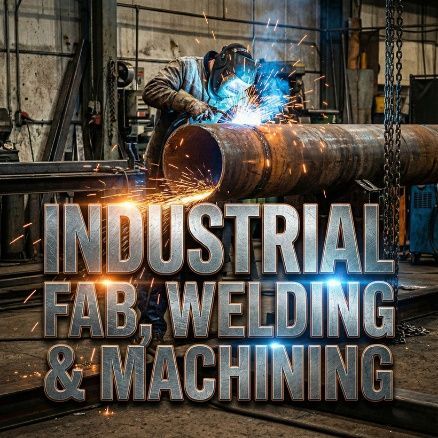
Structural welding serves as the backbone of civil infrastructure, heavy equipment manufacturing, and industrial energy projects. Selecting the appropriate arc welding process, managing hydrogen-induced cracking, and maintaining strict compliance with the AWS D1.1 Structural Welding Code are essential to prevent catastrophic structural failures in high-stress environments.On this episode of Industrial Fab, Welding & Machining, the engineering team at LTJ Industrial Services examines structural welding processes, non-destructive testing (NDT), metallurgical heat inputs, and field quality control.Technical Comparison: Structural Welding Processes & Code Applications
Read more
Learn more about LTJ Industrial Services at www.ltjindustrial.com/
mostra meno
- Shielded Metal Arc Welding (SMAW / Stick):
- Operational Environment: Highly portable field applications, retrofits, and outdoor structural repairs.
- Key Strengths: Tolerates surface contaminants (rust, mill scale); requires no shielding gas, making it wind-resistant.
- Limitations: Lower deposition rates; requires frequent electrode changes and post-weld slag removal.
- Flux-Cored Arc Welding (FCAW / Flux-Core):
- Operational Environment: Field structural steel erection (self-shielded) and shop fabrication (gas-shielded).
- Key Strengths: High deposition rates and deep joint penetration; ideal for vertical and overhead positions.
- Limitations: Requires careful heat input control to prevent excessive grain growth and slag inclusion defects.
- Gas Metal Arc Welding (GMAW / MIG):
- Operational Environment: Controlled shop fabrication for light-to-medium structural steel assembly.
- Key Strengths: High speed, high efficiency, and clean weld deposits without slag removal.
- Limitations: Highly sensitive to drafty or windy field conditions, which disrupt shielding gas coverage and induce porosity.
- Submerged Arc Welding (SAW):
- Operational Environment: Automated shop fabrication for heavy plate, girder assemblies, and thick beam flanges.
- Key Strengths: Maximum deposition rates, high weld quality, and deep penetration beneath a protective granular flux blanket.
- Limitations: Strictly restricted to flat and horizontal position welding; limited to shop environments.
- Validate Qualified Welding Procedure Specifications (WPS): Ensure all structural joints are welded in accordance with a written WPS backed by a Procedure Qualification Record (PQR) verifying tensile strength, yield, and bend ductility.
- Execute Hydrogen Control & Preheating Schedules: Maintain preheat and interpass temperatures specified by AWS D1.1 based on base metal thickness and carbon equivalency to eliminate hydrogen-induced cold cracking.
- Verify Welder Performance Qualification Records (WPQR): Confirm all field welders hold valid, active certifications for the specific position, material group, and process deployed on site.
- Deploy Non-Destructive Testing (NDT) Protocols: Perform 100% visual inspection (VT) followed by Ultrasonic Testing (UT) or Radiographic Testing (RT) on Complete Joint Penetration (CJP) welds to detect subsurface discontinuities.
- Structural Welding Foundations: The critical role of high-integrity welds in heavy infrastructure.
- Comparative Process Selection: Evaluating SMAW, FCAW, GMAW, and SAW for field vs. shop use.
- AWS D1.1 Code & Compliance: Navigating Welding Procedure Specifications (WPS) and PQR testing.
- Metallurgical Heat Control: Managing preheat, cooling rates, and hydrogen-induced cracking risks.
- Field Environmental Challenges: Overcoming wind, cold weather, and power logistics in site welding.
- NDT Quality Assurance: Implementing visual, ultrasonic, and radiographic inspection standards.
- Heavy Equipment & Industrial Fab: Partnering with LTJ Industrial Services for critical welding solutions.
Read more
Learn more about LTJ Industrial Services at www.ltjindustrial.com/
Informazioni
| Autore | Don Markland |
| Organizzazione | Don Markland |
| Sito | - |
| Tag |

Copyright 2026 - Spreaker Inc. an iHeartMedia Company

Commenti