Trascritto
Guide to the March 2026 Total Lunar Eclipse
3 mar 2026 ·
43 min. 7 sec.
Scarica e ascolta ovunque
Scarica i tuoi episodi preferiti e goditi l'ascolto, ovunque tu sia! Iscriviti o accedi ora per ascoltare offline.
Guide to the March 2026 Total Lunar Eclipse
Questa trascrizione automatica è offerta da
Sounder.AI
Questa è una trascrizione generata automaticamente. Si prega di notare che non è garantita la completa accuratezza.
Descrizione
On March 3, 2026, skywatchers will witness a total lunar eclipse, a rare celestial event often referred to as a "Blood Moon." This will be the only total lunar eclipse...
mostra di più
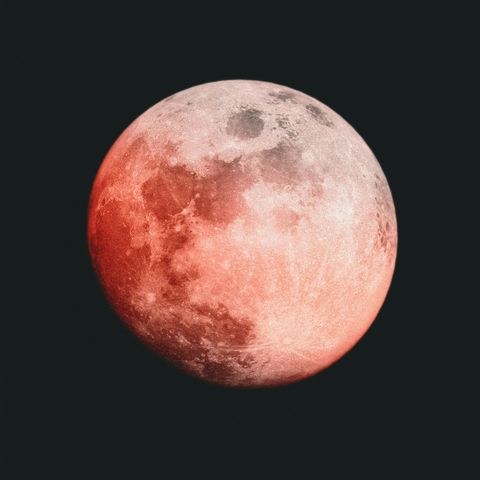
On March 3, 2026, skywatchers will witness a total lunar eclipse, a rare celestial event often referred to as a "Blood Moon." This will be the only total lunar eclipse of the year and the last one until the end of 2028. During this event, the Earth will pass directly between the Sun and the Moon, casting a deep shadow that transforms the lunar surface into a rich coppery red.
Where and When to Watch
The eclipse will be best seen from western North America, the Pacific, New Zealand, Australia, and East Asia. It will not be visible from Europe or Africa.
The event follows a specific global timeline (all times in UTC):
The Science of the "Blood Moon"
The red color is caused by Rayleigh scattering, the same phenomenon that creates red sunrises and sunsets. As sunlight passes through Earth’s atmosphere, shorter blue wavelengths are scattered away, while longer red wavelengths are bent (refracted) toward the Moon. The specific shade—ranging from bright orange to deep blood-red—depends on the amount of dust, clouds, and volcanic ash currently in Earth's atmosphere.
Viewing Tips
Capturing the Blood Moon requires adjusting to rapidly changing light levels:
On the night of the eclipse, the Moon will be located in the constellation Leo, near the bright star Regulus. Because the eclipsed Moon is much dimmer than a standard full moon, the surrounding stars and the "Sickle of Leo" pattern will be much easier to see than usual. Additionally, keep an eye out for a conjunction of Venus and Saturn just a few days later, on March 8, when they will appear very close to each other in the evening sky.
Become a supporter of this podcast: https://www.spreaker.com/podcast/the-world-between-us--6886561/support.
mostra meno
Where and When to Watch
The eclipse will be best seen from western North America, the Pacific, New Zealand, Australia, and East Asia. It will not be visible from Europe or Africa.
The event follows a specific global timeline (all times in UTC):
- 08:44 UTC: The penumbral eclipse begins as the Moon enters Earth’s faint outer shadow. This effect is very subtle.
- 09:50 UTC: The partial eclipse begins. To the naked eye, it looks as though a "bite" is being taken out of the Moon.
- 11:04 to 12:03 UTC: Totality. This is the most dramatic phase when the Moon is completely immersed in Earth’s shadow and turns red. The maximum eclipse occurs at 11:33 UTC.
- 13:17 UTC: The partial eclipse ends.
- 14:23 UTC: The penumbral eclipse ends, concluding the event.
The Science of the "Blood Moon"
The red color is caused by Rayleigh scattering, the same phenomenon that creates red sunrises and sunsets. As sunlight passes through Earth’s atmosphere, shorter blue wavelengths are scattered away, while longer red wavelengths are bent (refracted) toward the Moon. The specific shade—ranging from bright orange to deep blood-red—depends on the amount of dust, clouds, and volcanic ash currently in Earth's atmosphere.
Viewing Tips
- Safety: Unlike solar eclipses, a lunar eclipse is completely safe to view with the naked eye. No special filters or glasses are required.
- Equipment: While visible to the unaided eye, binoculars or a telescope will help you see subtle color variations and surface details.
- Location: Find an area with a clear view of the western horizon, especially if you are in North America, as the Moon will be low in the sky during its most dramatic phases.
Capturing the Blood Moon requires adjusting to rapidly changing light levels:
- Stability: A tripod is essential. As the Moon enters totality, it becomes much darker, requiring longer exposures that are impossible to shoot handheld without blur.
- Camera Settings: Use a telephoto lens (200mm to 600mm) for close-ups. For the bright partial phases, use a fast shutter speed (1/250s) and ISO 400. During totality, you will need to slow the shutter to 1–2 seconds and increase ISO to 800 or 1600.
- Focusing: Practice focusing on the Moon before the eclipse begins. Use manual focus or "live view" to ensure the lunar features are sharp.
- Smartphones: Avoid using digital zoom, which reduces image quality. Instead, take wide-angle landscape shots that include foreground elements like trees or buildings. Use a phone tripod and a timer to prevent camera shake.
On the night of the eclipse, the Moon will be located in the constellation Leo, near the bright star Regulus. Because the eclipsed Moon is much dimmer than a standard full moon, the surrounding stars and the "Sickle of Leo" pattern will be much easier to see than usual. Additionally, keep an eye out for a conjunction of Venus and Saturn just a few days later, on March 8, when they will appear very close to each other in the evening sky.
Become a supporter of this podcast: https://www.spreaker.com/podcast/the-world-between-us--6886561/support.
Informazioni
| Autore | Norse Studio |
| Organizzazione | Norse Studio |
| Sito | - |
| Tag |

Copyright 2026 - Spreaker Inc. an iHeartMedia Company

Commenti